
Bund Floor Lining
Bund floor lining is the chemically resistant, impermeable coating applied to the horizontal base of a bund. Within the wider bund lining hierarchy, it works alongside bund wall lining and joint detailing to deliver a continuous containment envelope across every bunded floor.
What is Bund Floor Lining?
Bund floor lining is a chemically resistant coating system applied to the floor of a bunded area. Its purpose is to prevent leaks, spills and stored chemicals from penetrating the underlying substrate. When correctly specified and installed, it forms part of a compliant secondary containment system.
When is Bund Floor Lining Required?
Common Bund Floor Lining Structures
Concrete bund floors beneath bulk storage tanks
Floor bunding to chemical and fuel storage compounds
Tanker offloading and loading bay floors
Drum and IBC storage deck floors
Process and plant room bunded floors
Pit, sump and catchpot bases
Chemical dosing and dispensing floors
Laboratory, cleanroom and pharmaceutical bunded flooring
Wastewater treatment bund floors
Secondary containment floors beneath pipework routes
GRP bund flooring panels and modular bunded floor systems
Rubber-lined bund floors, including bund rubber floor UK specifications for specific chemical duties
Bund Floor Lining Performance Requirements
Recommended Bund Floor Lining Systems
The most suitable bund floor lining system depends on the chemicals being stored, operating temperatures, traffic levels and maintenance requirements. ResChem specifies a range of proven resin systems to suit different containment environments.
Epoxy Resins
A key material for industrial epoxy floor coating duties, where the floor takes the brunt of foot traffic, drum handling and routine spillage. Epoxies are self-smoothing on horizontal surfaces, can be built to substantial film thickness without sag, and accept slip-resistant aggregate broadcast where the bunded floor needs traction underfoot.
Polyurethane Resins
Polyurethane systems are commonly specified where floors experience significant temperature variation, steam cleaning or thermal shock. Their flexibility helps accommodate substrate movement while maintaining chemical resistance.
Polyurea Resins
Polyurea systems cure rapidly, reducing downtime during installation. They are often specified where fast return-to-service is required alongside good impact and abrasion resistance.
Vinyl Ester Resins
Vinyl ester systems are often specified for aggressive acid environments where extended chemical exposure demands enhanced resistance.
Novolac Epoxy Resin
Uprated chemistry for hot product spills that pool on the slab and trap heat against the lining for longer than they would against a wall. Specified for floors below heated tanks, distillation skids and solvent process areas, where elevated-temperature pooling is the design case.
Bund Floor Lining Installation Methods
Bunded flooring is the surface that takes the longest dwell time of any contained spill, the brunt of plant and foot traffic, and the falls that send liquid to the sump. Different installation methods are used depending on the condition of the substrate, operational requirements and the performance demands of the containment area.
Site Fabrication
For floor-specific elements that standard sections cannot deliver. Channel and sump linings, fabricated drainage gratings, threshold strips where a bunded floor meets an unbunded one, and bespoke drum kerbs or plinth surrounds where containment is needed within the bunded area itself.
Lining and Levelling
Restoring positive falls to a single drainage point, infilling hollows with bonded self-smoothing screeds, and bringing an out-of-level slab back to specification before the chemical-resistant coats go on. Falls are a floor-only concern, and getting them right is what stops liquid pooling against a wall or column during a spill.
Protective Coatings
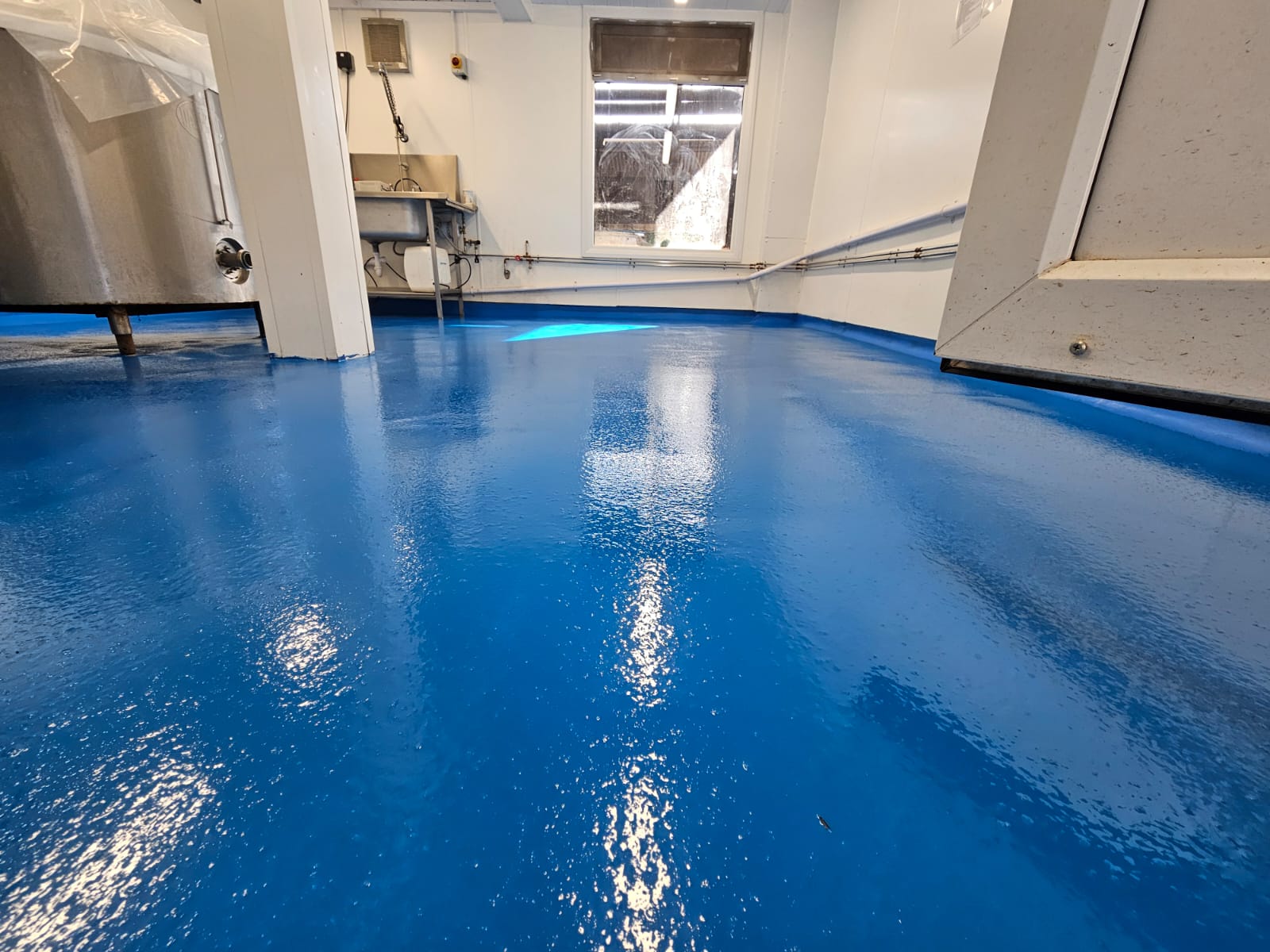
Multi-coat systems applied with squeegee, roller and trowel for horizontal build, broadcast with aggregate where slip resistance is required, and finished to a falls-true surface that drains cleanly. Floor coatings can be built to substantial film thickness without the sag concerns of a wall.
Bund Lining Repairs
Targeted remediation of forklift scuff, dropped-tool gouges, ponding-related surface attack and localised cracks where the rest of the floor is sound. Cut-out and reinstate work is sequenced to fit a single shutdown without re-coating the whole bund.
Trowel Applied Mortar Systems
Heavy-duty mortars used in tanker offloading bays, drum decks and areas exposed to hot product spillage, where the floor sees mechanical and thermal loads no other surface in the bund has to absorb. Also used to rebuild damaged channel arrises and threshold edges.
Surface Preparation
Captive-blasting, scabbling and diamond grinding tuned to horizontal substrates, including the removal of greasy or oil-saturated layers that floors absorb over years of service. Cracks and joints are tracked, opened and primed before any coating is applied, because a hidden crack in a floor is a leak path waiting for the next spill.
Bund Floor Lining Design Considerations
Regulatory Compliance
Bund floor lining systems should be specified and installed in accordance with relevant environmental, safety and containment regulations. Compliance requirements will vary depending on the stored product, site operations and industry sector.
Speak to a Specialist
Our technical team can advise on the right system for your project.
Bund Floor Lining FAQs
Bund floor lining is designed to withstand pooled spills, foot traffic, equipment movement and drainage requirements. Bund wall lining protects vertical surfaces and focuses on splash zones, weathering and containment continuity. While similar materials may be used, the design and installation requirements differ significantly.
Yes, slip resistance is built into the lining at the topcoat stage, either by broadcast aggregate (graded sand or aluminium oxide) or by texture-rolled finish, with the grade matched to the duty. Finer texture suits hygienic food production floors; coarser broadcast suits tanker bays and drum decks where heavy traffic and wet conditions combine.
Most bund floor lining projects complete in three to ten working days, including substrate preparation, application and cure, with rapid-cure polyurea systems compressing this further on time-critical assets. Larger floor areas, fall correction work and multi-bund estates typically run from one to three weeks depending on scope and access.
No, most floor damage is addressed through localised repair rather than full replacement, with cut-out and reinstatement targeted at the affected area while the rest of the bund stays in service. We move to a full re-line only when more than around 25–30% of the floor needs work, or when a survey identifies systemic rather than localised failure.
A correctly specified, properly applied and well-maintained bund floor lining typically delivers 15–25 years of compliant service across most UK industrial duties. High-traffic floors, such as tanker bays, drum decks, forklift routes, sit at the lower end of that range, while standard production-area bunds regularly reach the upper end.
Often yes, most floor work can be staged into planned outages, weekend shutdowns or zoned closures, with rapid-cure polyurea systems returning a bunded floor to traffic inside 24–48 hours. Where the floor serves continuous plant, work is staged in compartments so production carries on while one section at a time is taken offline.
Yes, every bund floor lining specification we issue is bespoke to the substance, substrate, traffic profile, falls requirement, slip-resistance demand and regulatory framework of the specific asset. Resin chemistry, film thickness, aggregate grade and falls correction are all matched to the site rather than picked from a standard package.
Featured Case Studies

Get Independent Expert Advice
Speak to our technical specialists about your bund lining requirements. Free, no-obligation site surveys available nationwide.
