
Build-Up Methods
In bund lining, “alternative build up” means how a specification is laid down: not the chemistry, but the sequence, thickness and application technique that turn materials into a working chemical containment barrier. The right resin built up badly fails long before the wrong resin built up correctly, which is why method matters as much as material on every bund.
How Build-Up Methods Work
Every bund lining is built in stages, and each stage sets up the one after it. Surface preparation gives the primer something to grip, levelling brings the substrate to an even plane, the protective coats build the chemical resistant barrier, and detailing seals the joints, corners and penetrations where containment usually fails first. Get the sequence right and the lining performs as a single envelope. Rush or skip a stage and it shows up later as a blister, a debond or a leak path, not at the moment it goes down.
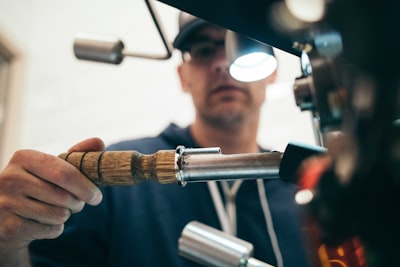
Bund Lining Repairs
Bund lining repairs is the build up method we use when a bund has localised damage but is otherwise serviceable: forklift impact, hot work damage, perished joint sealant, splash zone attack or a single point of coating failure. It sits between routine maintenance and full replacement, and the right repair...
Learn More
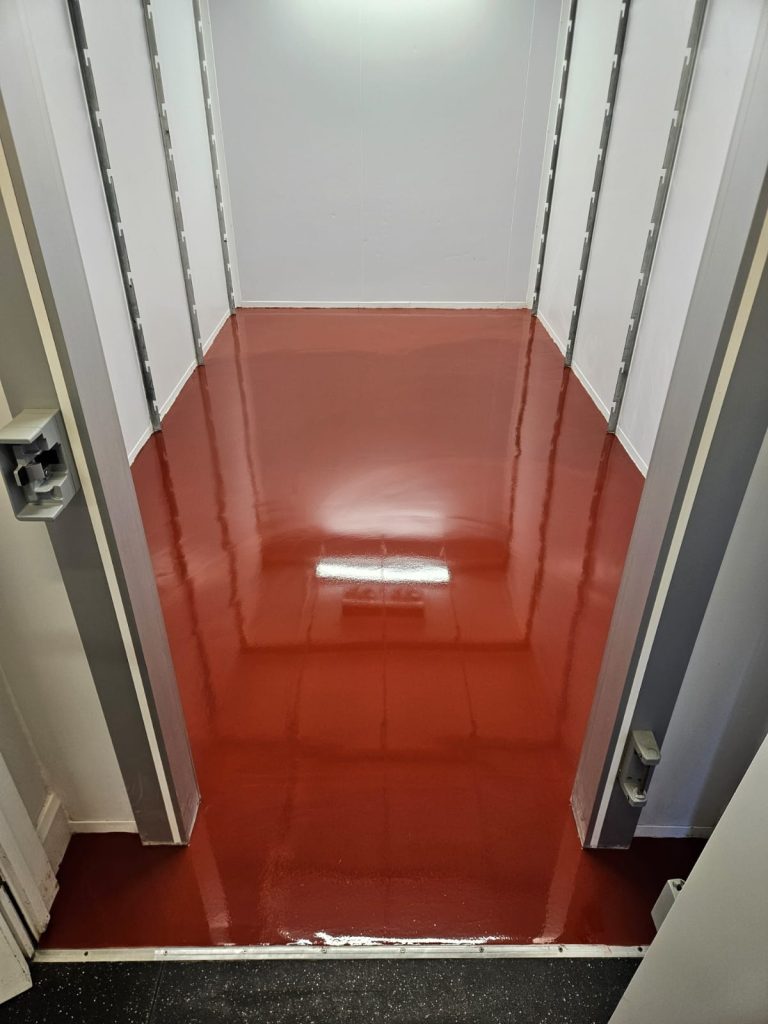
Lining and Levelling
Lining and levelling is the build up method we use to bring an out of spec substrate back to a planar, properly falling surface before any chemical resistant lining goes down. It is the foundation of most bund lining work, turning a tired, patched or out of level slab into...
Learn More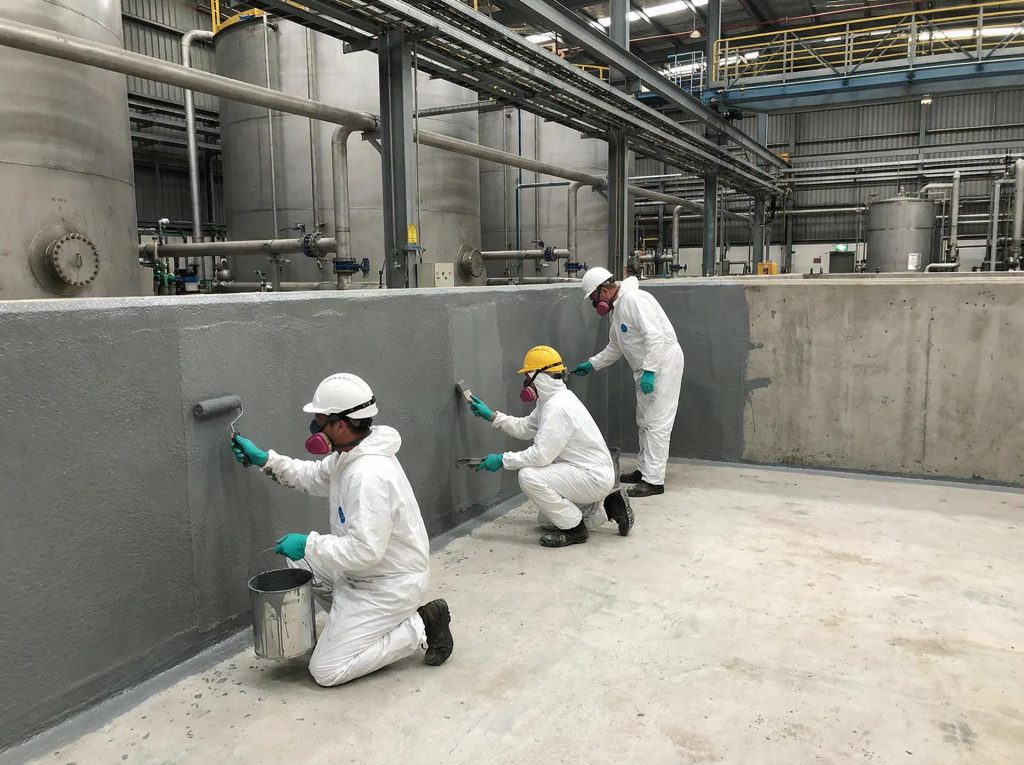
Protective Coatings
Protective coatings is the build up method we use most often across bund lining work. Multi coat resin film systems go straight onto the substrate to deliver chemical, mechanical and aesthetic performance in one engineered package. It sits between substrate preparation and reinforced laminate work, and is the default where...
Learn More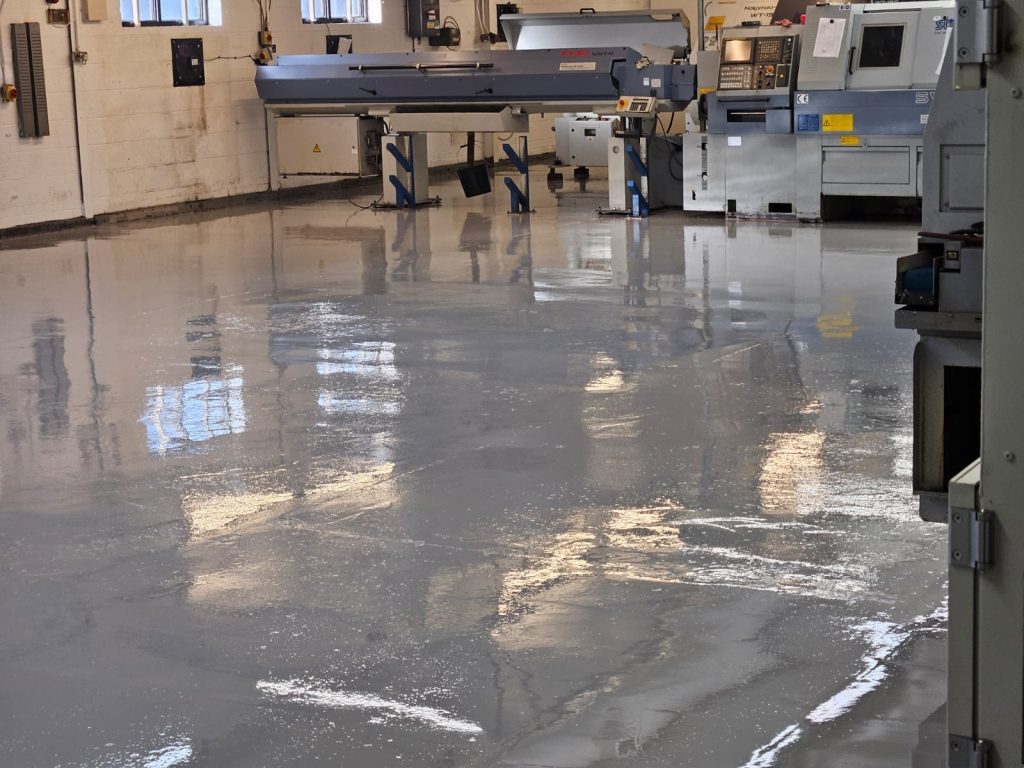
Site Fabrication & Lay-Up
Site fabrication and lay up is the build up method that creates monolithic GRP and FRP bund linings on site, laying glass mat into liquid resin ply by ply until a seamless reinforced barrier forms against the substrate. It sits at the heaviest end of bund lining, used where multi...
Learn More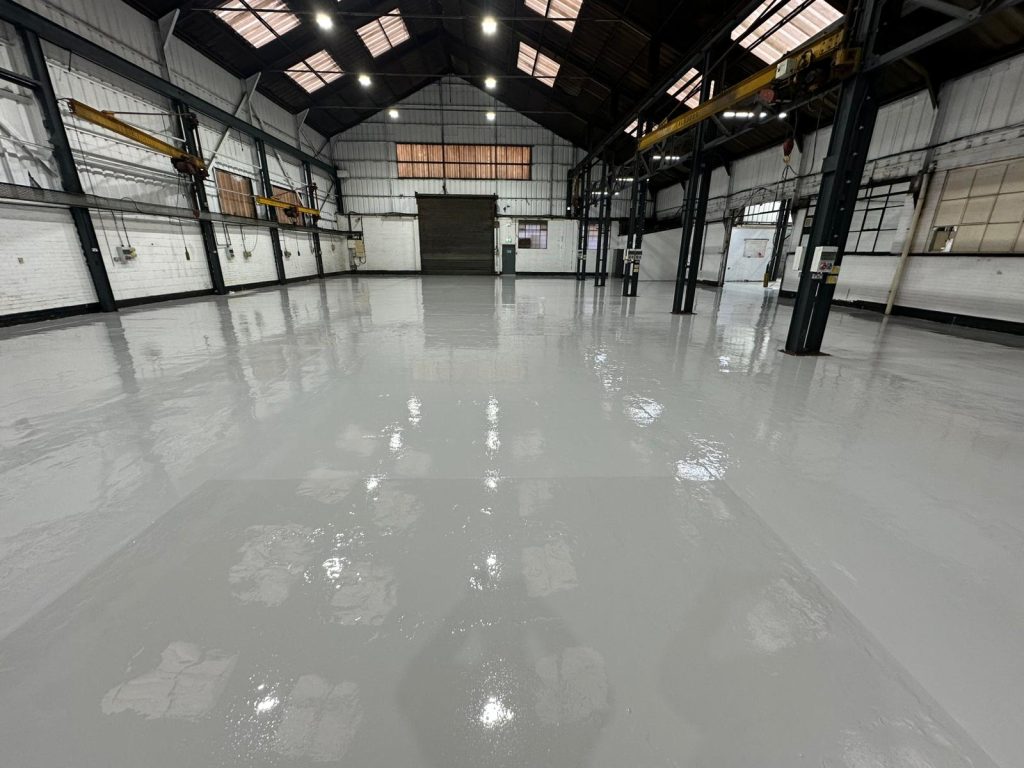
Surface Preparation
Surface preparation is the build up method that sits underneath every other one we deliver. It is the mechanical and chemical work that turns a contaminated, smooth or unsound substrate into a clean, profiled, fully bondable surface ready for a bund lining. Get it right and every later step performs...
Learn More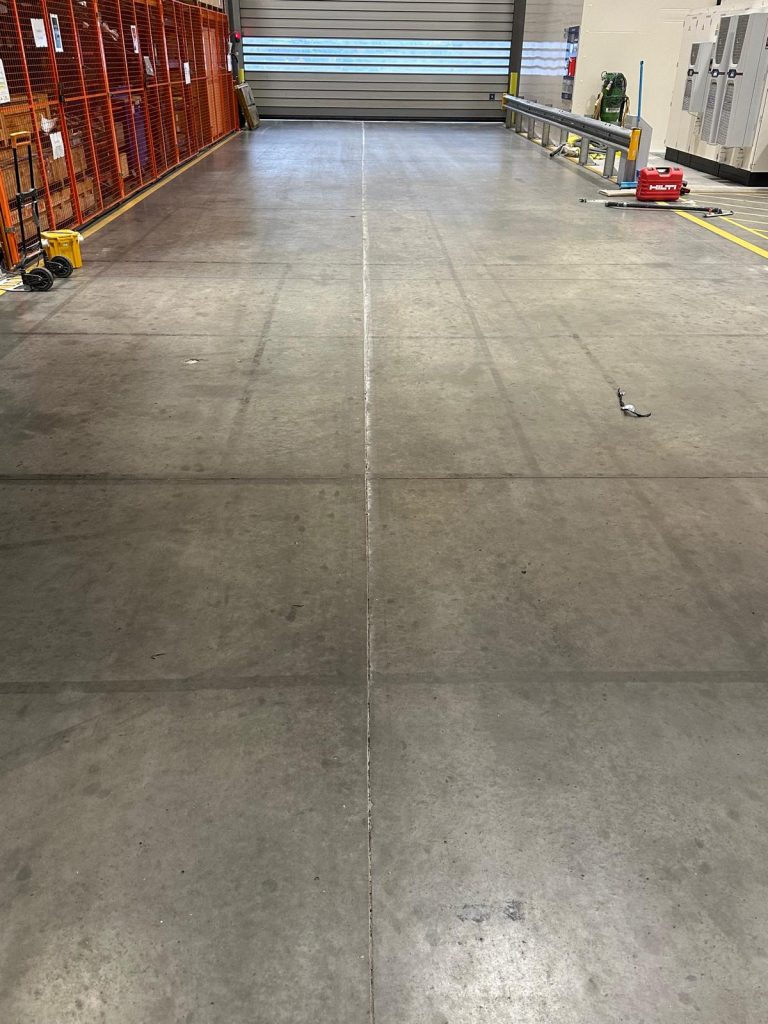
Trowel Applied Mortar Systems
Trowel applied mortar systems is the heavy build method we use when a bund has to take mechanical loading, thermal shock or chemical attack that a film coating cannot survive. Resin bound mortars and polyurethane concrete are placed by hand, compacted to thickness and finished as a single high integrity...
Learn MoreHow Build-Up Methods are Selected
Build-up selection is a structured decision, not a default. The factors we work through on every specification include:
- Substrate condition – sound concrete needs different preparation and build-up from cracked, contaminated or oil-saturated slabs.
- Thickness required – service life, mechanical load and chemical permeation determine the minimum dry film thickness across the bund.
- Chemical exposure – the worst credible spill, not routine exposure, drives both resin choice and application method.
- Site environment – temperature, humidity, access, ATEX zoning and live-working constraints shape what method is realistic on site.
- Programme – cure times, shutdown windows and return-to-service requirements influence whether rapid-cure or conventional methods are used.
- Substrate type – concrete, masonry, steel and FRP each demand different primers and build-up sequences.
- Budget – whole-life cost (specification, application, repair frequency) typically matters more than the line-item capital cost of the resin alone.
Relationship Between Build-Up and Material
Build-up and material are decided together and choosing one without the other usually leads to a specification that fails on site, regardless of how well it reads on paper. The same resin can deliver different performance depending on how it is built up, and the same build-up technique can hold different chemistries depending on the resin laid down inside it. A few sector-relevant examples:
- Epoxy Resins applied as a multi-coat protective coating are the workhorse for chemical resistant flooring in Food & Beverage production and for Oil, Gas and Petrochemical fuel bunds, where smooth, cleanable, hydrocarbon-resistant finishes are the design case.
- Polyurethane Resins built up as flexible, crack-bridging coatings suit Power Generation and Transmission outdoor transformer bunds, where UV and thermal cycling dominate.
- Polyurea Resins sprayed as rapid-cure systems suit Sewage and Waste Water Treatment wet wells and inlet works, where short outage windows define the programme.
- Vinyl Ester Resins built up as fibreglass bund lining laminates — glass-mat reinforced, wet-laid on site — suit aggressive Agriculture & Aquaculture slurry stores and acid-handling bunds in heavy industry.
- Novolac Epoxy Resin built up as trowel-applied or high-film coatings suits Nuclear Facilities active drainage trenches and other duties where elevated temperature combines with aggressive chemistry.
The point across every example is the same – bund linings perform as engineered systems, and the method of application is the part of that system most often misspecified or compromised on site.
Frequently Asked Questions
-
Generally, no. A failing lining is a debonded substrate, and any new system applied over it is only as good as the layer beneath. In a small minority of cases, where the existing system is sound but cosmetically worn, a compatible overcoat with verified adhesion testing can be specified.
-
No, thickness has to match the duty, and a thicker film of the wrong chemistry will still fail. The right specification balances chemical compatibility, mechanical demand and applied film thickness, rather than treating thickness as a proxy for performance.
-
A protective coating is a multi-coat film build at moderate thickness, typically 0.5–2 mm, designed to cope with routine chemical and mechanical exposure. A full lining is a thicker, often reinforced barrier, including fibreglass bund lining laminates and trowel-applied mortar systems, engineered to hold a contained spill against direct chemical attack across the asset's design life.
-
The principal references are CIRIA C736 (bund design and detailing), the BS EN 1504 series (concrete protection and repair), the Oil Storage Regulations and Environment Agency PPGs, alongside sector-specific frameworks such as COMAH, SSAFO and EU GMP. The build-up method itself is judged against the relevant standard's performance criteria rather than being prescribed line by line.
-
There is no fixed answer. Cost varies with area, chemistry, access, substrate condition and required film thickness, and surface preparation alone often accounts for 30–40% of the total. Reschem prices each build-up against the specific scope of work rather than a per-square-metre rate, so comparisons across methods reflect the real duty rather than headline figures.
-
Vertical work uses thixotropic, sag-resistant materials applied top-down to control runs and hold uniform thickness, with reinforcement at re-entrant corners and top-of-wall terminations. Horizontal work can use self-smoothing or self-levelling systems built to substantial thickness, with slip-resistant aggregate broadcast and falls engineered into the lining itself.
-
Slip resistance is built in by broadcast aggregate, anti-slip fillers or texture rolling at the topcoat stage, with grade selected to match the duty (light foot traffic versus heavy wash-down). Greater texture improves underfoot grip but reduces cleanability, so the build-up is tuned to the operating environment. This is often fine aggregate for hygienic areas, coarser broadcast for industrial bunds where cleanability matters less.