

Epoxy Resins Bunds
Epoxy resin is the workhorse of UK bund lining. This material has a two-part thermosetting chemistry that cures into a hard, chemically resistant film bonded to concrete or steel. We specify epoxy resin lining across most bund duties because it delivers reliable performance, predictable behaviour and sound whole-life cost.
What Is Epoxy Resin?
Epoxy resin is a two component thermosetting polymer: a liquid base from bisphenol A or bisphenol F, mixed with an amine, polyamide or amidoamine curing agent. The two react into a cross linked, three dimensional network, and the cure is irreversible, which is why a cured epoxy bund lining ends up far tougher and more chemically resistant than paint. Typical figures: Shore D 75 to 85 hardness, over 1.5 N/mm² pull off adhesion, 60 to 80°C wet service and 100 to 120°C dry, and an impermeable barrier at 0.5 to 2 mm dry film thickness.
Types of Epoxy Resin Bund Systems
Epoxy Resin Bund Key Features
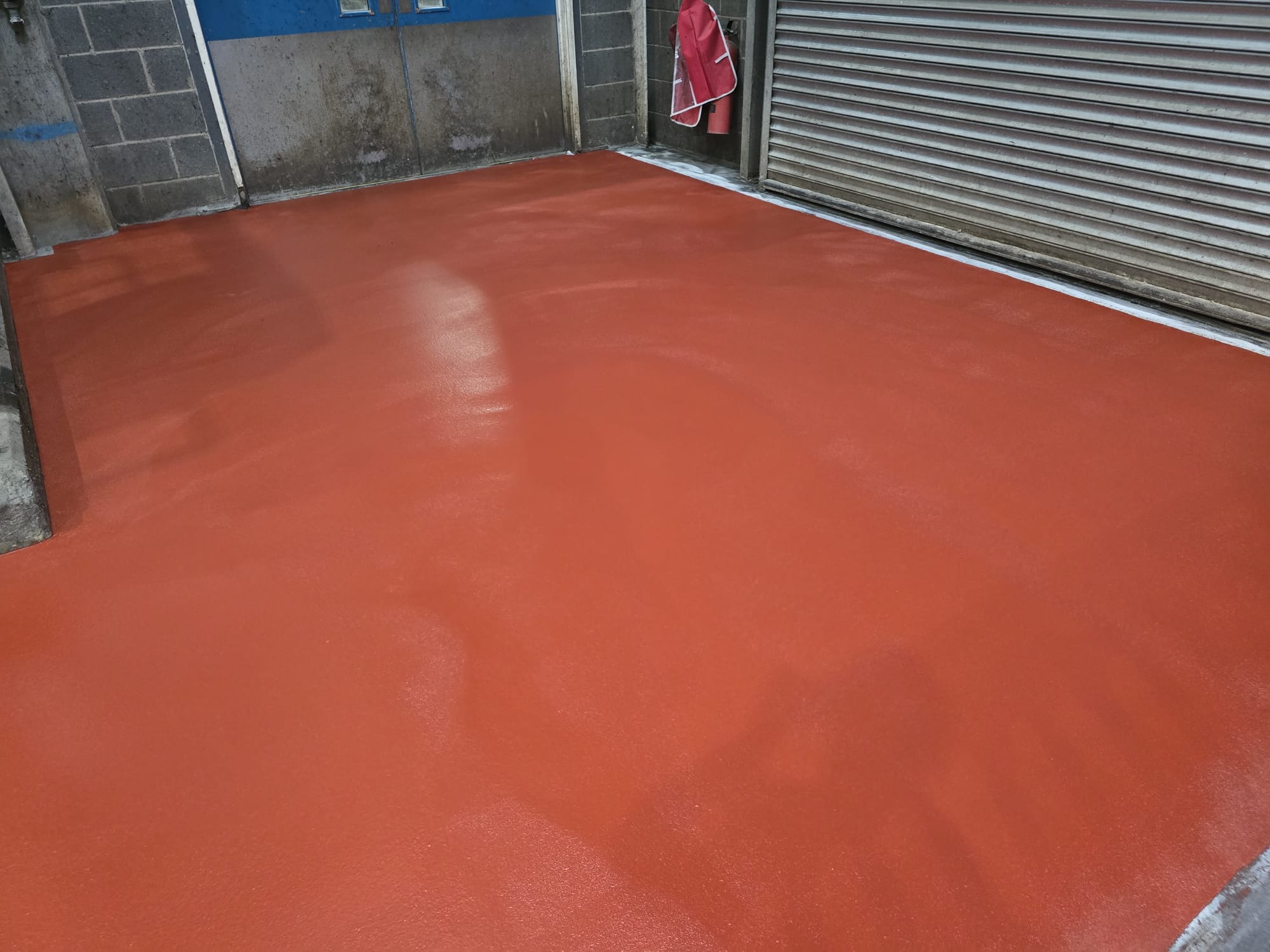
Epoxy Resin Bund Applications
Epoxy Resin Bund Chemical Resistance Profile
Epoxy handles a wide range of chemistry well, but it is not a universal answer. In broad terms:
Epoxy Resin resists well against:
Epoxy Resin has limitations against:
Epoxy Resin Bunds Build Up Methods
Lining and Levelling
Epoxy screeds and self-levelling underlayments are the default substrate preparation layer beneath most bund linings.
Protective Coatings
Multi-coat epoxy films are the most widely installed bund lining build-up in the UK.
Bund Lining Repairs
Epoxy systems are the most common repair chemistry, used to match the majority of existing bund linings in service.
Trowel Applied Mortar Systems
Heavily filled epoxy mortars are the standard heavy-duty system for industrial bunds with mechanical loading.
Surface Preparation
Every epoxy specification is preceded by preparation tuned to the chosen system.
Site Fabrication
Selectively, where amine-cure epoxy chemistry better suits the substrate or service than a vinyl ester lay-up.
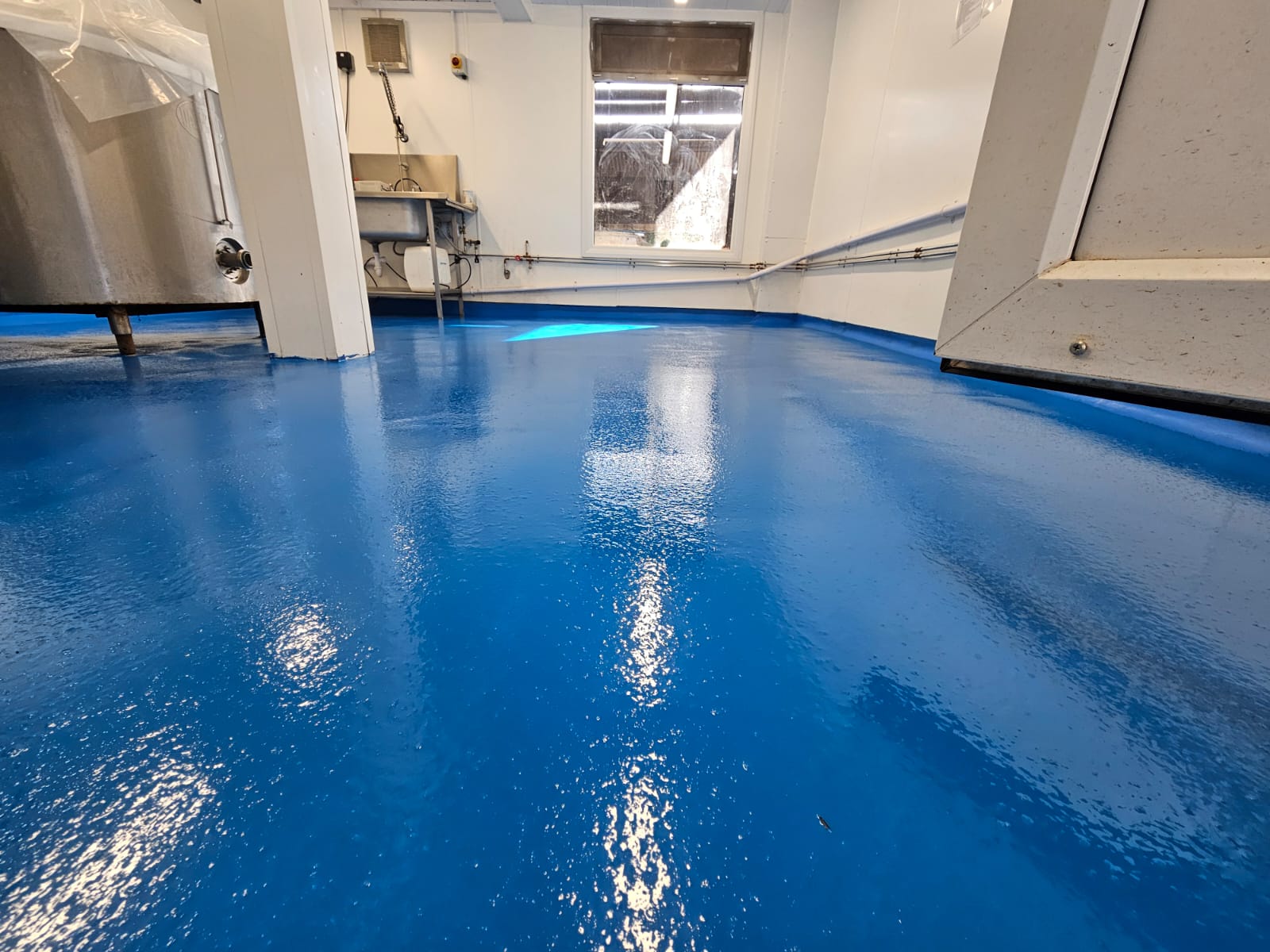
Epoxy Resin Bunds Surface Preparation Requirements
Epoxy Resin Bunds Surface Preparation Requirements
A well-applied epoxy is only as good as the substrate beneath it. Our standard preparation requirements are:
Concrete substrates
Abrasive blasted, scabbled or diamond ground to ICRI CSP 3–5, with all laitance, oils and unsound concrete removed.
Steel substrates
Abrasive blasted to SA 2.5 (near-white metal), primed within the manufacturer's specified window before flash rust forms.
Moisture content
Concrete moisture below 4% by weight (or as specified by the system manufacturer), verified by hygrometer or calcium chloride testing.
Detail repair
Cracks, blowholes and broken arrises reinstated with compatible polymer mortar before priming.
Cleanliness
Dust extracted, oils degreased and the surface presented dry, sound and contamination-free for priming.
Priming
Penetrating epoxy primer matched to the chosen body coat, applied at the manufacturer's specified rate and recoated within window.
Epoxy Resin Bunds Advantages and Limitations
We position epoxy honestly so the right chemistry can be specified for each duty:
Advantages
Limitations
Speak to a Specialist
Our technical team can advise on the right system for your project.
How Epoxy Resin Bunds Compare to Other Systems
Epoxy Resin Bunds FAQs
A correctly specified, properly applied and well-maintained epoxy resin bund lining typically delivers 15–25 years of compliant service. Heavily trafficked floors, hot-service areas and aggressive acid bunds sit at the lower end of that range, while standard hydrocarbon and food-area duty regularly reaches the upper end.
Epoxy chalks and fades under UV exposure, as the colour goes off and the surface dulls. However, underlying chemical and mechanical performance generally holds well. For external bunds where appearance matters, we specify a UV-stable polyurethane topcoat over the epoxy body coat, which preserves both the look and the chemistry.
Epoxy is not the right chemistry for concentrated mineral acids above roughly 30–50%, hot caustic service, polar solvents at concentration, hydrofluoric acid, or any duty where elevated temperature combines with aggressive chemistry. We specify vinyl ester, novolac or, in extreme cases, rubber bunding instead.
Yes, epoxy systems are routinely repaired and overcoated, using compatible epoxy chemistry bonded into the existing system after appropriate preparation. Recently applied epoxy can be overcoated within the manufacturer’s recoat window without mechanical keying; cured epoxy needs light abrasion before the new layer goes on.
Featured Case Studies

Get Independent Expert Advice
Speak to our technical specialists about your bund lining requirements. Free, no-obligation site surveys available nationwide.
