

Lining and Levelling
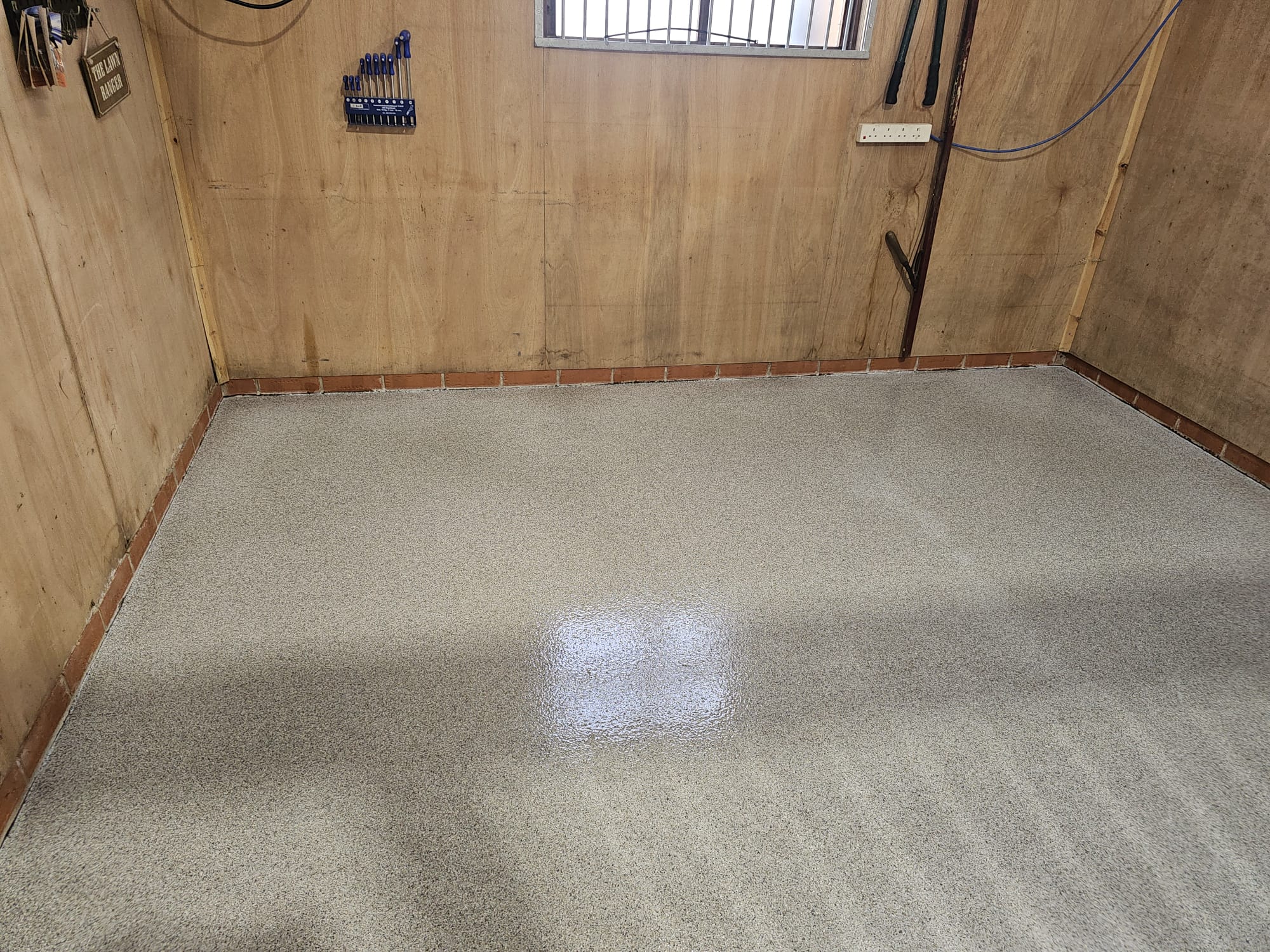
Lining and levelling is the build up method we use to bring an out of spec substrate back to a planar, properly falling surface before any chemical resistant lining goes down. It is the foundation of most bund lining work, turning a tired, patched or out of level slab into a substrate the rest of the build up can perform on. Without it, even the best topcoat is fighting a losing battle.
How Lining and Levelling Works
We treat lining and levelling as a sequenced restoration, not a quick fix. Each stage is completed and verified before the next, the goal being a substrate the chemical resistant lining can be applied to with confidence. Our standard sequence is:
When Is This Required?
Lining and Levelling Types
Lining and Levelling Performance and Thickness
Lining and levelling layers sit between 1 mm and 25 mm depending on what they correct. The levelling layer is not the chemical barrier: it is judged on planarity, falls accuracy and bond strength, while chemical resistance comes from the lining on top. Each variant suits a different level of correction:
- Self smoothing finishes: a planar, true to falls surface at low build (1 to 3 mm).
- Self levelling underlayments: moderate fall correction and surface defects (3 to 10 mm).
- Trowel applied mortars: anything heavier, including step changes, broken arrises and full local rebuild (up to 25 mm).
The levelling layer itself is not the chemical barrier. Its performance is judged on planarity, falls accuracy and bond strength, while chemical resistance is delivered by the lining applied on top of it.
Compatible Lining and Levelling Materials
Material selection depends on the lining specified for the rest of the bund. The levelling layer must be chemically and mechanically compatible with whatever sits on top. We typically apply:
Epoxy Resins
The workhorse for levelling screeds and mortars. Compatibility with epoxy topcoats and a reliable bond to concrete make it the default across most bunded flooring.
Polyurethane Resins
For PU screed levelling where thermal cycling and substrate movement are part of the design case, particularly under polyurethane topcoats in food, beverage and external bunds.
Polyurea Resins
Rarely used for levelling in pure form, because the rapid cure profile fights the longer working time needed to place and finish a levelling layer. We apply it as the topcoat over an epoxy or PU base.
Vinyl Ester Resins
As chemically resistant levelling mortars on aggressive acid duty, where the levelling layer has to share the chemistry of the FRP or vinyl ester topcoat above.
Novolac Epoxy Resin
For high temperature levelling where the bund operates above the working envelope of standard epoxy mortars.
Advantages of Lining and Levelling
Lining and Levelling Limitations
Need a lay-up specified for a demanding bund?
Speak to Reschem about the right laminate build-up, resin choice and inspection regime for aggressive chemical duty, confined structures or long-life containment assets.
When to Choose Lining and Levelling
We specify lining and levelling when one or more of these apply:
Lost falls
The floor ponds water against a wall, column or drain edge.
Repeatedly patched
Years of patching and recoating have left a non planar surface that would compromise any new topcoat.
New lining going in
The substrate needs reprofiling before a chemical resistant lining can perform as designed.
Tight shutdown
The substrate has to be brought back to a known specification before the topcoat goes on.
Concentrated defects
Blowholes and historical damage sit in patches, needing local levelling rather than a full recoat.
One specification wanted
Across a bund that previously carried repair patches of different ages and chemistries.
Lining and Levelling Applications and Industries
Lining and levelling runs across almost every sector we work in, with the heaviest demand where falls and floor planarity are non negotiable:
Food & Beverage
Restoring falls in production bunds, CIP areas and wash-down corridors, where ponding compromises hygiene as much as containment.
Chemical Processing
Bringing multi-product, historically patched floors back to a single specification before the new chemical-resistant topcoat is applied.
Sewage and Waste Water Treatment —
Re-profiling channel falls and digester surrounds where decades of operation have left low spots.
Power Generation and Transmission
Correcting fall to oil-water separators on transformer bunds where historical patching has produced multiple drainage issues.
Oil, Gas and Petrochemical
Re-levelling tanker offload aprons and fuel bund floors after years of mechanical wear.
Agriculture & Aquaculture
Restoring effluent channel falls in silage clamps and slurry bund floors.
Nuclear Facilities
Preparing active drainage trenches and cell floors to a planar, decontaminable specification before the BS 4247-compliant topcoat is applied.
Lining and Levelling Surface Preparation Requirements
Lining and Levelling Quality Assurance and Testing
Lining and Levelling FAQs
Self-smoothing screeds correct surface irregularities up to around 3 mm, self-levelling underlayments handle 3–10 mm, and trowel-applied epoxy mortars carry up to roughly 25 mm in a single application. Anything beyond that is normally addressed with a trowel applied mortar system or, where structural fill is needed, a polymer-modified concrete repair before the levelling layer goes on.
Lining and levelling itself is not the chemical containment layer, it is the engineered foundation, and the chemical-resistant topcoat applied above is what handles long-term exposure. Where the levelling layer is required to share that duty, we specify chemically resistant mortars matched to the topcoat chemistry rather than relying on a generic levelling product.
The levelling layer itself rarely needs maintenance once the chemical-resistant topcoat is in place, as it is encapsulated and protected by the lining above. Maintenance is focused on the topcoat and its detail treatment, with the levelling layer only revisited if the topcoat fails locally and the substrate underneath needs reprofiling.
Yes. Lining and levelling is straightforward to apply in confined and restricted access areas, with materials brought in by hand and finished with hand tools rather than relying on large mechanical plant. Adequate ventilation and DSEAR-compliant working are essential during placement and cure.
Operators should plan for moderate disruption, typically over several consecutive days, covering substrate prep (which generates dust and noise), levelling layer placement, cure time and the subsequent topcoat application. Rapid-cure resin systems compress the programme where the operator can absorb a more concentrated outage rather than a longer phased one.
Substrate preparation typically takes one to two days, the levelling layer one day to place plus a 12–24 hour cure, and the topcoat is applied once cure is verified. A standard bunded floor of moderate size is usually ready to return to service four to seven working days from arrival on site, including the chemical-resistant topcoat above the levelling layer.
Featured Case Studies

Get Independent Expert Advice
Speak to our technical specialists about your bund lining requirements. Free, no-obligation site surveys available nationwide.
