

Polyurethane Resin
Polyurethane resin is the chemistry we specify when flexibility, thermal cycling and weather tolerance matter as much as chemical resistance. We use PU resin across external bunds, food and beverage production floors and any duty where a rigid epoxy would crack or yellow. It is the most adaptable elastomeric chemistry in our range.
What Is Polyurethane Resin?
Polyurethane is a two component thermosetting polymer made by reacting an isocyanate with a polyol. Like epoxy it cures by chemical reaction, but instead of a rigid, glassy network it forms a tough, flexible matrix that can be tuned across a huge range of hardnesses, from a soft, elastomeric crack bridging membrane (Shore A 60 to 80) up to a hard, traffic grade floor (Shore D 70 to 85). Cured PU gives excellent abrasion resistance, sound adhesion to concrete and steel, a service window from below freezing to over 130°C in PU concrete form, and thermal shock resistance rigid epoxies cannot match. It is the chemistry of choice when the substrate is moving, the temperature is cycling or the bund is exposed to weather.
Types of Polyurethane Resin Systems
Polyurethane Key Features
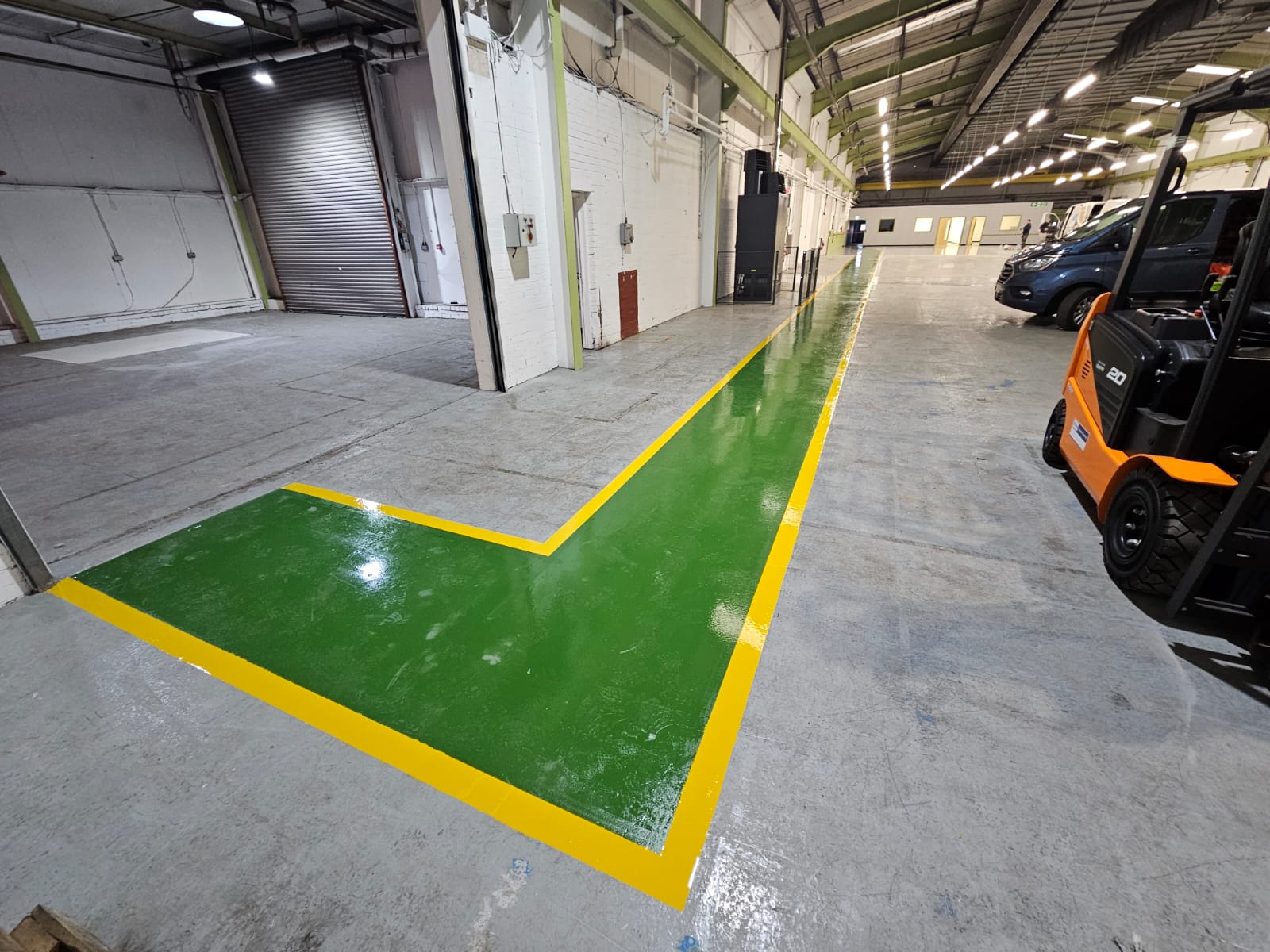
Polyurethane Applications
Polyurethane Chemical Resistance Profile
Polyurethane has a different chemistry profile from epoxy, it is broader on movement and temperature, slightly narrower on aggressive chemistry. In broad terms:
Polyurethane resists well:
Polyurethane has limitations against:
Polyurethane Build Up Methods
Lining and Levelling
PU screeds and self-smoothing underlayments where thermal cycling or substrate movement rules out rigid epoxy levelling.
Protective Coatings
Multi-coat polyurethane films, typically with an aliphatic topcoat, applied across most flexible-duty bund coatings.
Bund Lining Repairs
PU systems used to match existing PU host linings, particularly on outdoor bunds and food production areas.
Trowel Applied Mortar Systems
Polyurethane concrete (PUC/PUMA), the heavy-build PU flooring system used across food, beverage and dairy production at scale.
Surface Preparation
Every PU specification is preceded by preparation tuned to the chosen system, with particular attention to substrate moisture.
Site Fabrication
Selectively, on bespoke detail bands and over-laminated movement details where PU's flexibility outperforms rigid alternatives.
Polyurethane Application Conditions
Polyurethane Surface Preparation Requirements
Polyurethane shares most preparation requirements with epoxy, with a few additional sensitivities:
Concrete substrates
Abrasive blasted, scabbled or diamond ground to ICRI CSP 3–5, with all laitance, oils and unsound concrete removed.
Steel substrates
Abrasive blasted to SA 2.5, primed within the manufacturer's specified window before flash rust forms.
Moisture content
Under 4% by weight on standard PU; PU concrete tolerates higher moisture by design.
Detail repair
Cracks, blowholes and broken arrises reinstated with compatible mortar before priming.
Cleanliness
Fully extracted, dry, contamination-free substrate.
Priming
PU-compatible primer applied within the system's recoat window. Penetrating primers are particularly important for PU concrete to lock the cementitious component into the substrate.
Polyurethane Advantages and Limitations
We position polyurethane honestly against the rest of the range so the right chemistry can be specified for each duty:
Advantages
Limitations
Need a bund lining that can handle movement, weather and thermal cycling?
Speak to Reschem about polyurethane resin systems for external bunds, food production floors and duties where flexibility, UV stability and thermal shock resistance matter as much as chemical performance.
How Polyurethane Compares to Other Systems
Polyurethane FAQs
A correctly specified, properly applied and well-maintained polyurethane bund lining typically delivers 15–25 years of compliant service. PU concrete in food production duty regularly reaches the upper end of that range, while elastomeric PU membranes on aggressive external service may sit at the lower end depending on UV and chemical load.
Aliphatic polyurethane systems are highly UV stable and retain colour, gloss and surface integrity across years of external exposure, which is one of the principal reasons we specify them outdoors. Aromatic PU systems chalk and yellow under UV in the same way as standard epoxy, so we specify aliphatic chemistry whenever appearance and long-term weathering matter.
Polyurethane is not the right chemistry for concentrated mineral acids, strong oxidisers, polar solvents at concentration, hot caustic or hydrofluoric acid duty. We specify vinyl ester, novolac or specialist alternatives instead, and reserve polyurethane for duties where movement, weather and thermal cycling dominate the specification.
Yes, polyurethane systems are routinely repaired and overcoated using compatible PU chemistry bonded into the existing system after appropriate preparation. Recently applied PU can be overcoated within the manufacturer’s recoat window without mechanical keying; cured PU normally requires light abrasion to ensure inter-coat adhesion.
Featured Case Studies

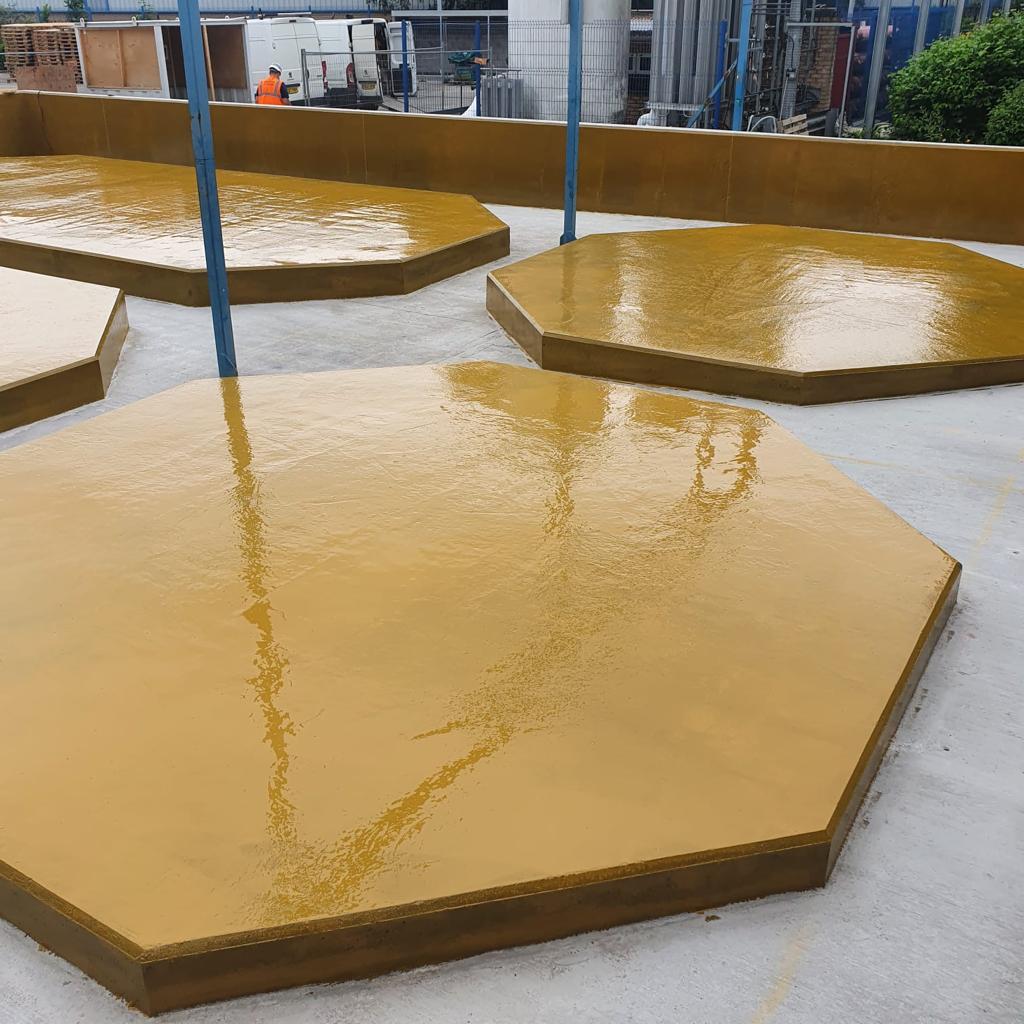
Specify the right PU system for demanding site conditions.
From aliphatic topcoats and elastomeric membranes to PU concrete systems, we can help match the resin build-up to the substrate, exposure and service temperature.
