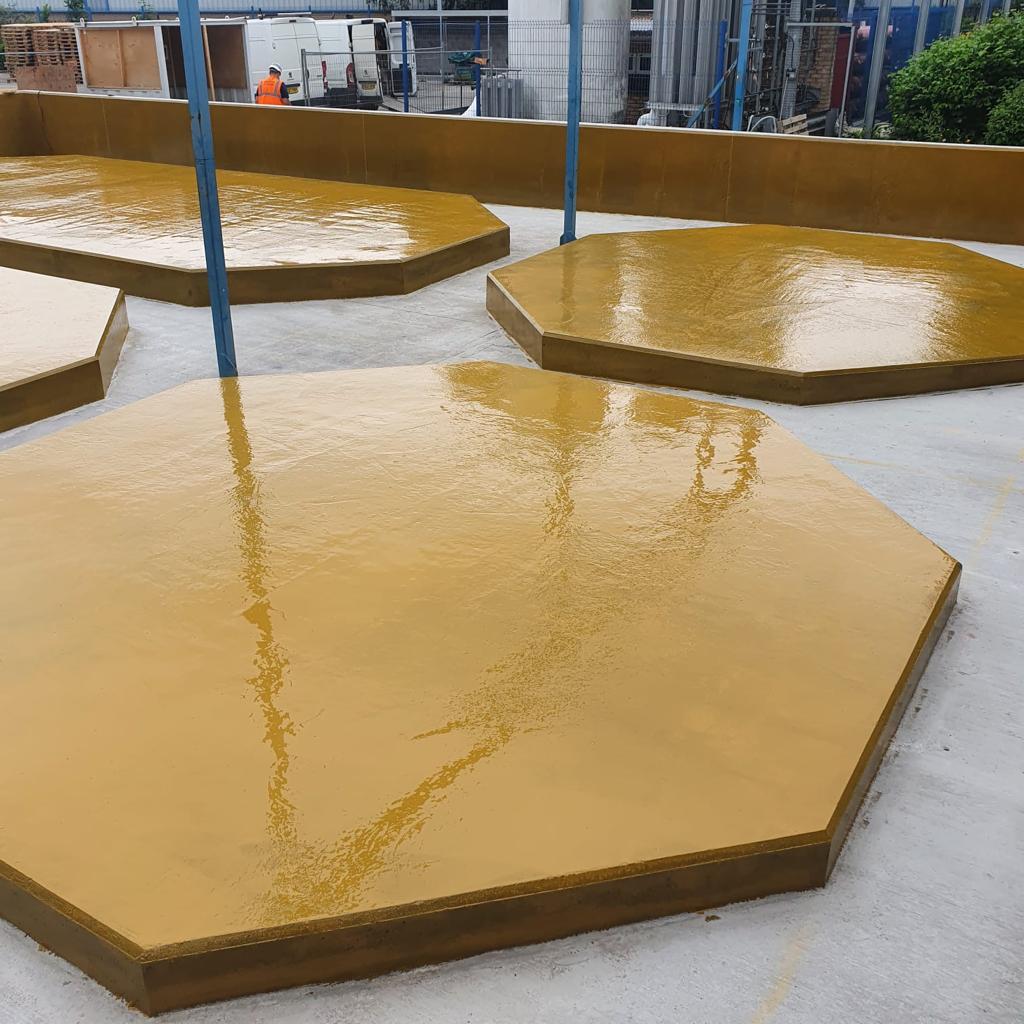

Food & Beverage
In food and beverage, bund lining is the hygienic, chemically resistant barrier that keeps process liquids, ingredients and cleaning chemistry safely contained and keeps them away from production areas, drains and watercourses.
Key Bund Lining Challenges in Food & Beverage
Food and beverage sites do not face the most aggressive chemistry in industry, but they face some of the most relentless. Lining systems are typically asked to cope with frequent hot wash-downs, repeated CIP cycles, sticky organic loadings and a constant balance between hygiene and durability.
Challenges
The result is that an effective liquid bund in this sector has to be hygienic, thermally tolerant and resistant to a fluctuating but persistent chemical load — not a one-off acid spill, but ten thousand wash-downs across its life.The challenges that shape every food and beverage specification we write include:
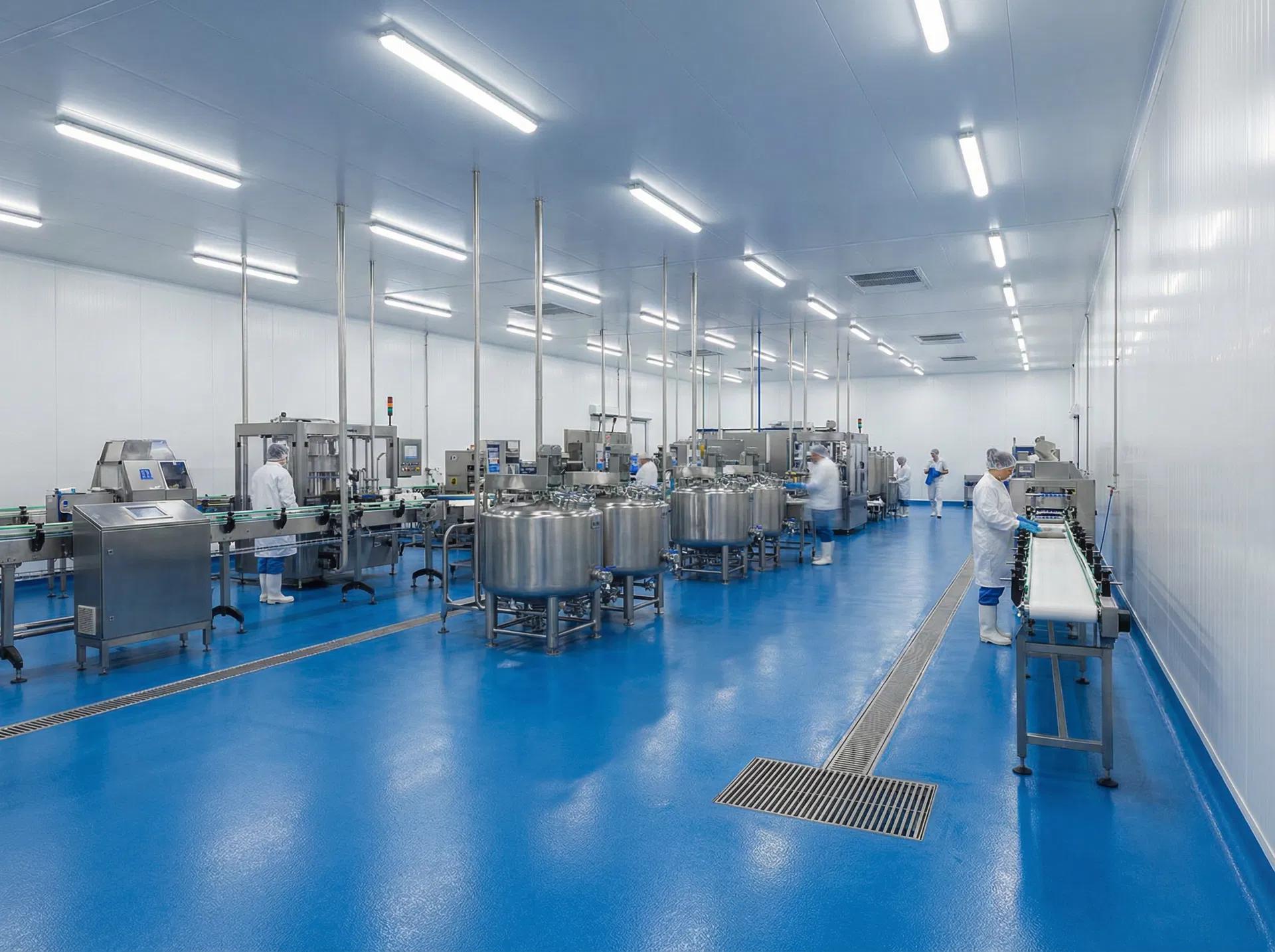
Common Applications In Food & Beverage
Liquid containment in food and beverage extends well beyond the obvious tank farms. Where a hot, cold, sticky or acidic liquid is handled, a properly specified liquid bund is part of the answer. Common applications we line include:
Brewhouse, mash room and fermentation cellar bunds
Distillery still rooms, spirit safes and cask filling areas
Dairy processing floors, Including pasteurisation, separation and cheese-making halls
Edible oil and fat storage tanks and refining bunds
Syrup, concentrate, juice and ingredient storage compounds
CIP set bunds and chemical store rooms for caustic, acid and sanitiser bulk
Bottling, canning and aseptic filling hall floors
Bakery and confectionery production floors with sugar and oil exposure
Cold stores, blast freezers and refrigeration plant rooms (including ammonia compounds)
Boiler houses, steam plant rooms and thermal fluid skids
Tanker offloading bays for milk, wort, vegetable oils and bulk ingredients
Effluent and trade effluent neutralisation bunds, including grease traps
Wash-down corridors, gulley runs and oil spill bunding around any process oil systems
Regulatory and Compliance Obligations In Food & Beverage
Food and beverage operators sit under a different mix of regulation from the chemical sector — hygiene-led, traceability-driven and audited by both statutory bodies and customer schemes. Specifications we issue for food and beverage clients are written so that bund clean records, CIP chemistry documentation and compatibility data sit together as an audit-ready evidence pack. The principal obligations and references we design to are:
The Food Safety Act 1990 and Regulation (EC) 178/2002 (retained in UK law)
The foundation for safe production and the avoidance of contamination from facility surfaces.
HACCP (Hazard Analysis and Critical Control Points)
Drives surface design choices around cleanability, drainability and the absence of crevices.
BRCGS Global Standard for Food Safety and BRCGS Storage and Distribution
Customer audit standards which routinely scrutinise floor and bund condition.
FSA and local Environmental Health Officer inspections
The day-to-day touchpoint for many UK producers.
DSEAR (Dangerous Substances and Explosive Atmospheres Regulations)
Relevant in distilleries, ethanol storage and dust-handling areas.
COMAH
Applicable where ammonia refrigeration, bulk ethanol or other thresholds are met.
Environment Agency
PPG2 and PPG18 for fuel oil, thermal fluids and chemical handling, alongside trade effluent consents for discharge to sewer.
BS EN 1672-2
Hygiene requirements for food machinery, applied by analogy to surrounding lining and bund detailing.
Industrial Emissions Directive
Controls where larger producers operate under environmental permits.
Recommended Lining Systems in Food & Beverage
Resin selection in food and beverage is more about chronic performance than acute chemical attack. The systems we draw on most often, with detail on each material on its sub-page, are:
Epoxy Resins
The reliable choice for general food production and ingredient store bunds, where thermal load is moderate and the duty is dominated by routine wash-down and dilute CIP. Epoxies offer cleanable, hygienic surfaces at sound whole-life cost.
Polyurethane Resins
The go-to chemistry where hot CIP, steam and thermal shock are part of daily operation. PU systems handle the rapid hot–cold cycling seen in dairies, brewhouses and pasteurisation halls without crazing or debonding.
Polyurea Resins
Rapid-curing systems used where production windows are very short, including weekend shutdowns on bottling lines, canning halls and cold stores that cannot tolerate extended downtime.
Vinyl Ester Resins
Specified for the more aggressive ends of food chemistry, including peroxyacetic acid sanitiser stores, concentrated nitric CIP, high-temperature lactic acid duty and aggressive cleaning regimes in dairies and breweries.
Novolac Epoxy Resin
Uprated epoxies for vegetable oil and edible fat refining, hot oil thermal fluid skids and other elevated-temperature duties where standard epoxies would soften or yellow.
Speak to a Specialist
Our technical team can advise on the right system for your project.
Food & Beverage FAQs
Plan inspections around scheduled CIP windows and production breaks, work to a permit-controlled confined space procedure, and use surveyors trained in the cleaning chemistry, ammonia and CO₂ risks specific to your area. Keep visual checks frequent and log every inspection against the wall, floor and joint registers so issues are caught before they reach the product or production floor.
Primary containment is the vessel itself, such as the tank, kettle, fermenter, CIP set, IBC or pipe holding product or cleaning chemistry. Secondary containment is the bund engineered around it to catch any leak, drip or overspill. Primary holds the product in normal operation; secondary only comes into play if primary fails, and is what keeps a leak from reaching production floors, drains or watercourses.
Often this can be done, yes. Rapid-cure polyurea systems can have a bund relined and back in service inside a single weekend break, and most repairs can be sequenced around CIP cycles, line shutdowns or seasonal stops. Where the bund serves continuous plant, work is staged in compartments so production carries on while one section at a time is taken offline.
Running a visual inspection on a defined cycle should be done monthly for higher-risk areas such as ammonia plant rooms, ethanol storage and bulk CIP chemical bunds, and quarterly to annually for routine production bunds. This should be supported by hydrostatic testing every three years where the duty requires it. The cycle should be set by the duty, not the calendar, and recorded as part of your BRCGS and HACCP evidence pack.
A correctly specified and maintained bund lining typically delivers 15–25 years of compliant service, with the variable being CIP frequency, thermal cycling and area chemistry rather than the resin family alone. Joint sealants and detail treatment usually need replacing inside that window – most commonly every 7–10 years.
Featured Case Studies