
Chemical Processing
In chemical processing, bund lining is the engineered chemical resistant layer that lets a concrete bund hold reactive, corrosive or aggressive process media without itself becoming part of the problem.
Key Bund Lining Challenges in Chemical Processing
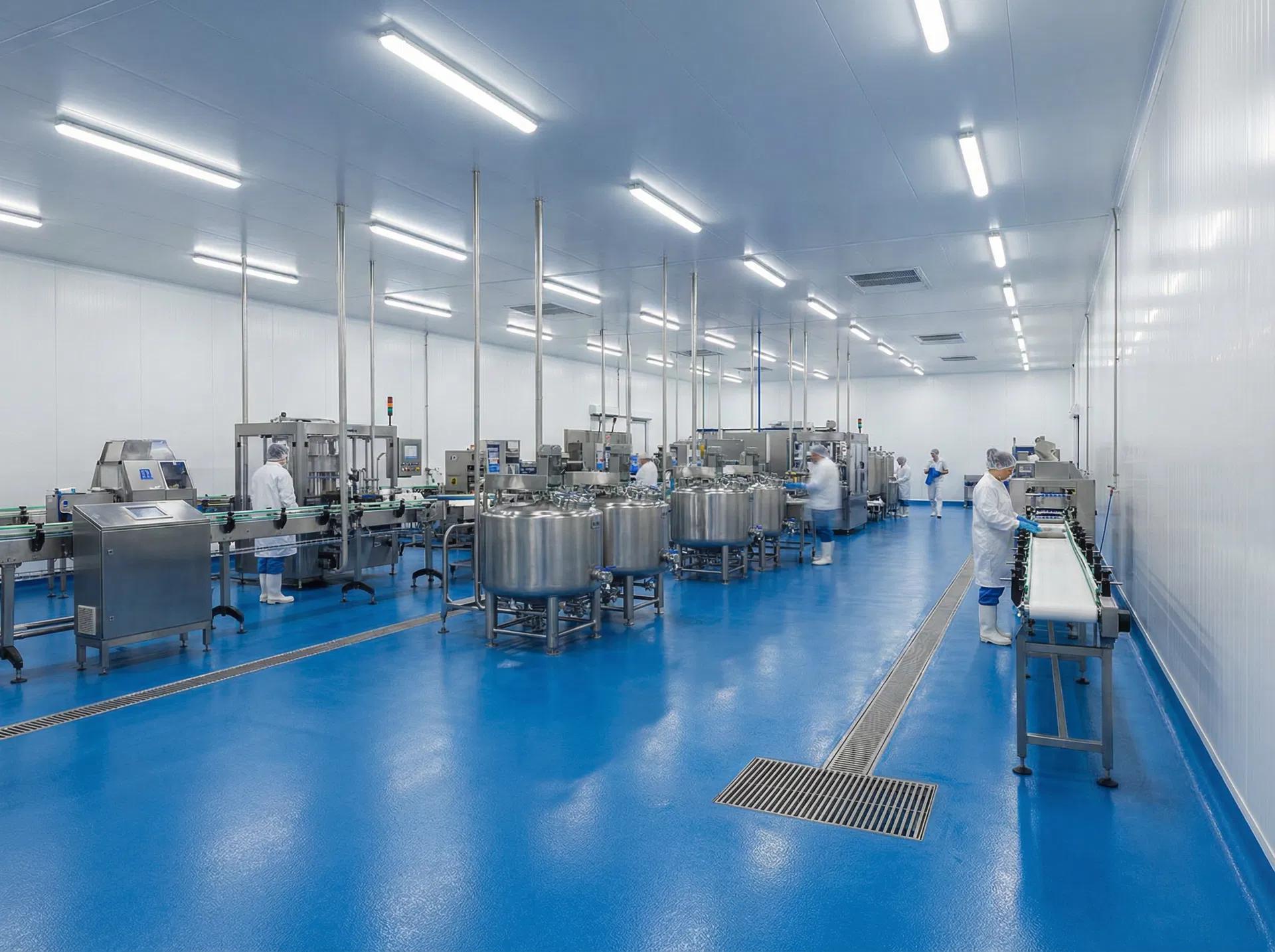
Chemical processing is the sector where lining specification has the smallest margin for error. Unlike fuel storage, where the chemistry is broadly predictable, a chemical bund on a process site can see dozens of different substances over its life — some by design, some by spillage, some by changeover. The challenges that shape every chemical bund lining specification we write include:
- Concentrated mineral acids, including sulphuric, hydrochloric, nitric and phosphoric, often at elevated temperatures
- Caustic alkalis and aggressive cleaning chemistry used for changeover and CIP
- Polar and non-polar solvents that swell, soften or dissolve unsuitable resins
- Oxidising agents, including peroxides and hypochlorites, which break down standard epoxies rapidly
- Mixed and unknown chemistry in shared bunds, drum stores and tanker offload areas
- Thermal shock from hot product spills, steam cleaning and outdoor exposure
- Mechanical demand from drum handling, forklift movement and IBC stacking
- Vapour exposure that attacks linings even where direct liquid contact is rare
- Tight, scheduled changeover windows where lining work must fit a planned shutdown
- A regulatory environment that treats containment failure as an immediate environmental incident
Key Bund Lining Challenges in Chemical Processing
Chemical processing is the sector where lining specification has the smallest margin for error. Unlike fuel storage, where the chemistry is broadly predictable, a chemical bund can see dozens of different substances over its life, some by design, some by spillage, some by changeover. The challenges that shape every specification we write include:
Common Chemical Processing Applications
Chemical processing sites carry an unusually wide spread of bunded assets, and chemical floor bunding tends to extend well beyond the obvious tank farms. Common applications we line include:
Reactor and reaction vessel bunds in batch and continuous plants
Dosing skids, day tanks and additive injection compounds
Tank farms for raw materials, intermediates and finished products
Drum, IBC and tote storage decks, including bunded chemical store rooms
Tanker offloading and loading bays handling tankered acids, alkalis and solvents
Acid bunds at pickling lines, surface treatment and electroplating areas
Solvent recovery, distillation and stripping plant bunds
Blending, mixing and formulation room floors
Laboratory, pilot plant and QC bunded areas
Effluent neutralisation tanks, sumps and process drainage
Bunded plant rooms housing pumps, filters and heat exchangers
Emergency shower, eye-wash and decontamination zones
Chemical Processing Regulatory Obligations
Chemical processing sits squarely under UK process safety, environmental and chemicals regulation. Compliance is judged not just by the design but by what can be evidenced when the regulator visits, so our specifications and chemical containment repairs build a continuous evidence trail from material selection to handover. The principal obligations we design to are:
COMAH
Control of Major Accident Hazards Regulations 2015 — covers most upper- and lower-tier chemical sites and treats containment integrity as a core safety control measure.
REACH and CLP
Drive substance identification, classification and labelling, which feed directly into compatibility assessment for the lining.
DSEAR
Dangerous Substances and Explosive Atmospheres Regulations — relevant wherever flammable solvents are handled, including conductive flooring and ATEX zone considerations.
Environment Agency
PPG18 (chemical handling), PPG2 (oil storage where solvents and hydrocarbons coexist) and the EA position statements on chemical containment.
HSE
Process safety guidance, including HSG71 (storage of packaged dangerous substances) and HSG250 (guidance on permissioning regimes).
CIRIA C736
Practical industry reference for bund design, freeboard and detail treatment.
BS EN 1992-3
Design of concrete structures for retaining liquids, where applicable to new build.
Site Permits
Issued under the Environmental Permitting Regulations, which often specify containment integrity testing intervals and reporting expectations.
Recommended Lining Systems for Chemical Processing
Resin selection in chemical processing is the most demanding of any sector we serve. The choice has to reflect actual exposure, not idealised laboratory data, and our typical palette is:
Epoxy Resins
Suitable for milder chemical duties, dilute acids, alkalis at moderate concentration and most general process spillage. Often the right answer for utility and ancillary bunds within a chemical plant.
Polyurethane Resins
Selected where movement, thermal cycling and external exposure are the dominant drivers, particularly on outdoor reagent storage compounds and tanker offloading.
Polyurea Resins
Rapid-cure systems for shutdown work, where the line cannot tolerate extended downtime, and for areas with combined chemical and mechanical demand.
Vinyl Ester Resins
The chemistry of choice for concentrated mineral acids, oxidising environments and aggressive industrial process streams. The default uplift for a true acid bund.
Novolac Epoxy Resin
Uprated epoxies engineered for high-concentration acids, polar solvents and elevated service temperatures, including process areas where standard epoxies would soften or dissolve.
Speak to a Specialist
Our technical team can advise on the right system for your project.
Chemical Processing FAQs
Standard support includes annual visual inspection, hydrostatic integrity testing on a defined cycle, condition surveys when degradation is suspected, planned joint and sealant replacement, and targeted repair work whenever localised failure is identified. We also revisit the COSHH and compatibility documentation whenever stored chemistry changes, since the original specification may no longer reflect what the bund is actually holding.
We start with manufacturer chemical resistance data matched against every substance on the operator’s COSHH and SDS list, then commission immersion testing or laboratory exposure trials where the mixture sits at the borderline of published data. The final specification is documented with the compatibility evidence so the bund’s suitability is traceable for regulator and insurer audit.
Most chemical processing bund lining projects complete in five to fifteen working days, including aggressive substrate preparation, application and cure, with rapid-cure systems compressing this on time-critical assets. Larger reactor compounds, FRP/GRP lay-up work and multi-product facilities typically run from two to six weeks depending on scope and shutdown windows.
Run a visual inspection at least annually, with quarterly to monthly checks on aggressive acid bunds, dosing skids and high-turnover process areas where chemistry attacks the lining most aggressively. Hydrostatic testing intervals are typically set by the site’s environmental permit and run every three years on most chemical processing assets.
A correctly specified, properly applied and well-maintained chemical processing bund lining typically delivers 15–25 years of compliant service, with vinyl ester and novolac systems on aggressive acid duty often reaching the upper end of that range. Drum decks, tanker offload bays and high-traffic process floors sit at the lower end due to combined chemical and mechanical wear.
Featured Case Studies