Build-Up Methods

Novolac Epoxy Resin

Novolac epoxy is the premium chemistry in the epoxy family, uprated for hot acid, hot solvent and elevated temperature service that standard epoxy resin lining cannot reliably hold. We specify it on the most demanding chemical bund duties, where temperature meets aggressive media and a standard epoxy would soften, swell or degrade.

Overview

What Is Novolac Epoxy Resin?

Novolac epoxy starts with a phenolic novolac base resin, which carries far more reactive groups per molecule than the bisphenol A or F bases in standard epoxy. Cured with the right hardener, those extra groups form a much denser cross link that holds its properties at higher temperatures and in more aggressive chemistry. Glass transition temperatures typically sit at 150°C or higher, against 60 to 80°C for standard epoxy, with continuous service reaching 100 to 150°C. The trade off is brittleness, so we specify it where chemistry and temperature dominate, not where flexibility matters.

Types of Novolac Epoxy Systems

  • Standard novolac epoxy: the workhorse for hot acid and solvent duty, used as the binder in coatings, mortars and selective laminates.
  • Cresol novolac epoxy: uprated again on temperature and chemical resistance, with a higher Tg and better hot-aqueous performance.
  • Bisphenol-novolac hybrid: blends novolac functionality with bisphenol backbone, offering some of the chemical resistance with slightly improved toughness.
  • Anhydride-cured novolac: used for the most demanding high-temperature service, with continuous duty above 150°C and excellent chemical resistance.
  • Filled novolac mortars: heavily filled trowel-grade systems for acid-resistant flooring, hot oil bunds and chemically aggressive process areas.
  • Hand lay-up novolac: used selectively as the binder in FRP/GRP work where vinyl ester’s chemistry is not enough, including some hot acid and hot solvent laminates.

Novolac Epoxy Key Features

High glass transition temperature: typically 150°C+, allowing service temperatures well above the standard epoxy ceiling.
Outstanding chemical resistance: the broadest envelope of any chemistry in our range, covering hot acids, oxidisers, solvents and aggressive process media in one specification.
Solvent resistance: significantly better than standard epoxy against polar and aprotic solvents (DCM, DMF, MEK, acetone), which is one of novolac's headline differentiators.
Hot service performance: handles hot oil, hot acid, steam and elevated process temperatures without softening.
Mechanical strength: hard, dense and low in permeability, with strong adhesion to prepared concrete and steel.
Low water absorption: tighter cross-link network gives lower permeability than standard epoxy across all media.
Compatible with epoxy infrastructure: primers, trowel grades and topcoat options align with existing epoxy specifications, simplifying multi-product builds.
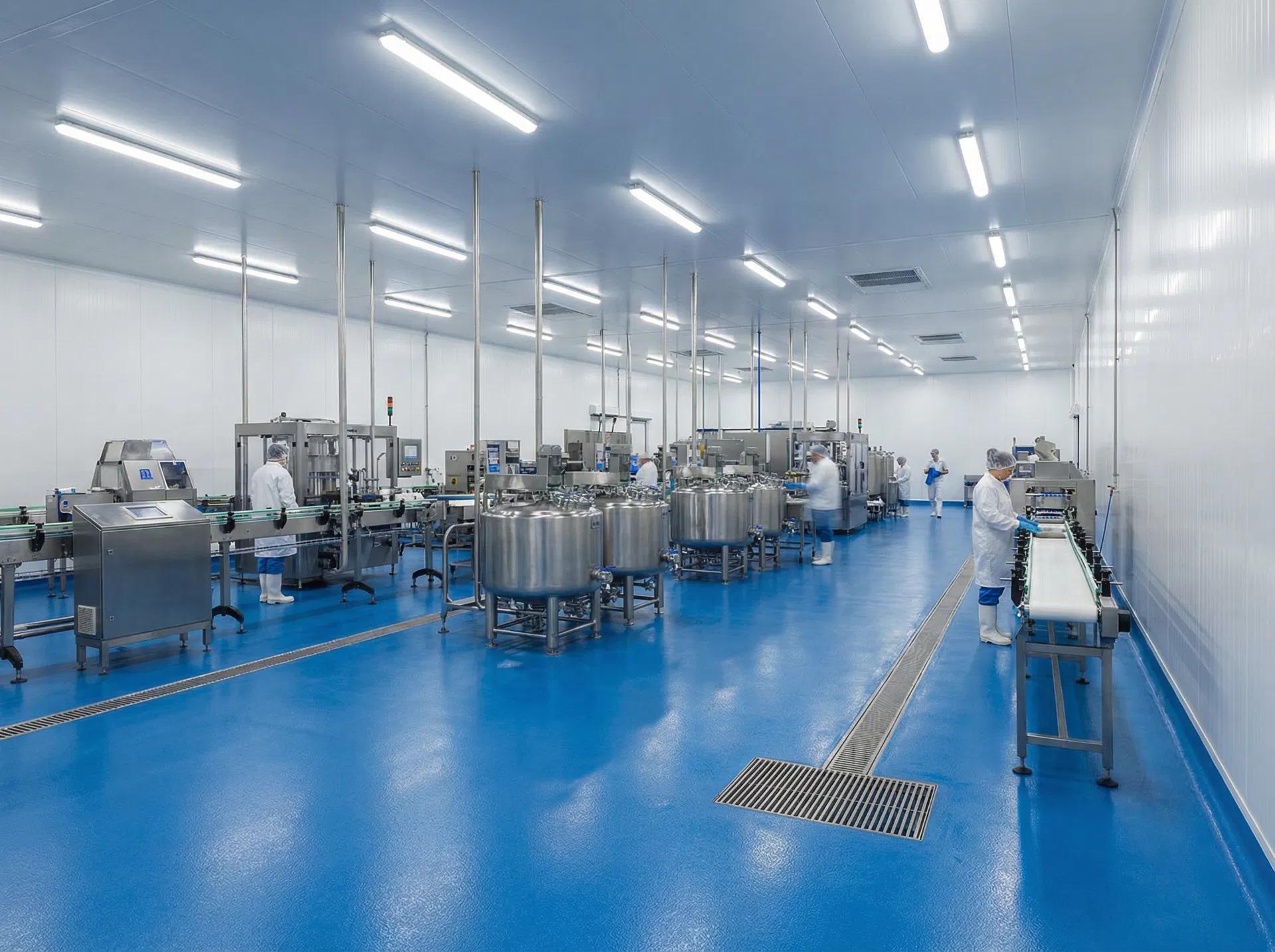
Cleanroom production facility with blue resin flooring

Novolac Epoxy Applications

  • Chemical Processing: hot acid bunds, solvent storage compounds, reactor surrounds and process drainage carrying mixed and aggressive chemistry.
  • Nuclear Facilities: active drainage trenches, mixed-waste sumps and hot acid duties in fuel cycle and effluent treatment plant.
  • Oil, Gas and Petrochemical: refinery process bunds, hot oil compounds and aromatic-rich service where standard epoxy would soften.
  • Power Generation and Transmission: hot lube oil systems on turbine skids, ester fluid containment under modern transformers and ion exchange regeneration plant.
  • Sewage and Waste Water Treatment: anaerobic digester internals, hot ferric chloride dosing zones and concentrated reagent bunds.
  • Food & Beverage: hot edible oil refining, vegetable oil tank bunds and high-temperature CIP areas where rigid epoxy would soften under repeated thermal load.
  • Agriculture & Aquaculture: AD digester internals, hot wash-down areas and bunded chemical stores carrying concentrated agricultural inputs.
profile

Novolac Epoxy Chemical Resistance Profile

Novolac is the broadest-spectrum chemistry in our range, but it is not a universal answer.For full chemistry data, see our Chemical Resistance Tables before finalising any specification, particularly where temperature and chemistry combine. In broad terms:

Novolac epoxy resists well:

  • Concentrated mineral acids at elevated temperatures, where standard epoxy would soften
  • Polar and aprotic solvents — DCM, DMF, MEK, acetone — at concentrations that destroy standard epoxy
  • Hydrocarbons including aromatic-rich streams
  • Hot water, steam and pressurised aqueous media in continuous service
  • Most oxidising chemistry, including hypochlorites and peroxides
  • Salts, brines and aqueous chemistry across temperature

Novolac epoxy has limitations against:

  • Strong alkalis at concentration — like standard epoxy and vinyl ester, novolac is acid-side chemistry
  • Hydrofluoric acid, which requires carbon-filled vinyl ester or specialist alternatives
  • Heavy mechanical movement, where the dense cross-link network's brittleness becomes a liability
  • UV exposure, where novolac chalks in the same way as standard epoxy
Build-Up Methods

Novolac Epoxy Build Up Methods

Protective Coatings

Multi-coat novolac films are the most common build-up, applied where chemical resistance and elevated temperature both matter.

Trowel Applied Mortar Systems

Heavily filled novolac mortars for acid-resistant flooring, hot oil bunds and aggressive chemical service.

Bund Lining Repairs

Matched novolac repair work where the existing host system is itself novolac, particularly on long-life acid containment assets.

Site Fabrication

Selectively, as the binder in FRP/GRP lay-up work where vinyl ester's chemistry is not enough, including hot acid and hot solvent laminates.

Lining and Levelling

Selectively, on hot service bunds where the levelling layer itself has to share the chemistry of the topcoat above.

Surface Preparation

Every novolac specification is preceded by aggressive preparation tuned to the chosen system.
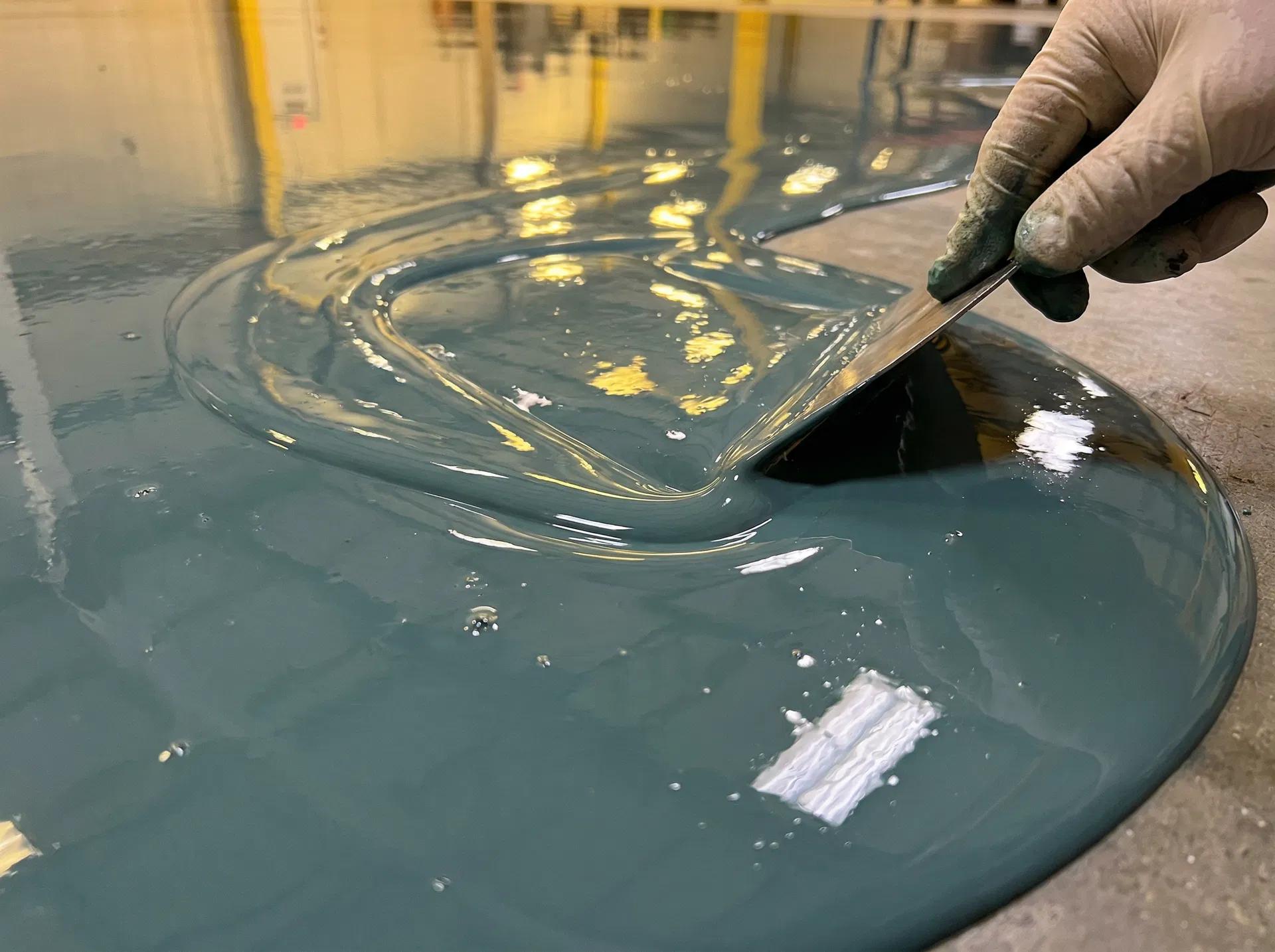
Resin floor coating being applied by hand
Requirements

Novolac Epoxy Surface Preparation Requirements

  • Air temperature: typically 15–30°C, with most novolac systems narrowing the working envelope compared to standard epoxy.
  • Substrate temperature: at least 3°C above dew point, monitored continuously across the working day.
  • Relative humidity: usually below 80% RH, with novolac sensitive to surface moisture during cure.
  • Substrate moisture: under 4% by weight, verified by hygrometer or calcium chloride testing.
  • Pot life: typically shorter than standard epoxy, often 20–40 minutes once mixed, with strict batch control essential.
  • Recoat window: system-specific and often tighter than standard epoxy, with missed windows requiring mechanical keying.
  • Cure time: chemical cure is slower than standard epoxy in lower temperatures, with full chemistry not achieved until 7–14 days at standard ambient.
  • Application equipment: brush, roller, airless spray and trowel, depending on the build-up. Hand lay-up uses the same tools as vinyl ester laminate work.
  • Mixing discipline: exact ratios, mechanical mixing, side-and-bottom scraping. Novolac is unforgiving of partial mixing.
Requirements

Novolac Epoxy Surface Preparation Requirements

Novolac demands aggressive preparation, comparable to vinyl ester, because the chemistry it holds is operating at the demanding end of what any epoxy can do. Our standard requirements are:

Concrete substrates

Abrasive blasted, scabbled or shot blasted to ICRI CSP 3–7 depending on the build-up, with deep mechanical profile for trowel mortar and laminate work.

Steel substrates

Abrasive blasted to SA 2.5, primed within the manufacturer's specified window before flash rust forms.

Moisture content

Under 4% by weight, with extra rigour because novolac is unforgiving of damp substrates.

Detail repair

Cracks, blowholes and broken arrises reinstated with compatible polymer mortar before priming.

Cleanliness

Fully extracted, dry and contamination-free, with chemical decontamination where the substrate has seen service.

Priming

Novolac-compatible primer applied within the recoat window. Standard epoxy primer is sometimes acceptable, but the system manufacturer's recommendation prevails.

benefits

Novolac Epoxy Advantages and Limitations

We position novolac honestly so the right chemistry can be specified for each duty:

Advantages

  • The broadest chemical resistance of any chemistry in our range, covering acids, solvents, oxidisers and elevated-temperature aqueous service in a single specification
  • High service temperature ceiling — 100–150°C continuous, higher in dry duty
  • Outstanding solvent resistance, including DCM, DMF, MEK and acetone at concentration
  • Hard, dense, low-permeability network with measurably lower water absorption than standard epoxy
  • Compatible with the wider epoxy specification range, simplifying primer, mortar and topcoat selection
  • Long service life — typically 20+ years on aggressive chemical duty when properly applied
  • Available across multi-coat coatings, trowel mortars and selected laminate work

Limitations

  • More brittle than standard epoxy, with limited tolerance for substrate movement and mechanical impact
  • Higher cost per litre than standard epoxy and most polyurethane systems, justified by chemical performance rather than headline rate
  • Shorter pot life and tighter recoat windows, demanding stricter batch control
  • Limited resistance to strong alkalis at concentration
  • UV exposure causes chalking like other epoxies; aliphatic polyurethane topcoats specified for external duty
  • Requires experienced applicators and disciplined mixing, with less margin for error than standard epoxy
  • Not the right choice where chemistry and temperature sit comfortably within the standard epoxy envelope
Get Expert Advice

Speak to a Specialist

Our technical team can advise on the right system for your project.

Comparison

How Novolac Epoxy Compares to Other Systems

  • Epoxy Resins VS Novolac: novolac is the uprated cousin: same family, denser cross-link network, much higher temperature and chemical resistance. Use standard epoxy for general duty, novolac for hot, concentrated or solvent-heavy service.
  • Polyurethane Resins VS Novolac: novolac is rigid and chemistry-led; PU is flexible and movement-led. They solve different problems and are rarely interchangeable, though they are sometimes paired (PU body coat with novolac topcoat) on demanding duty.
  • Versus Polyurea Resins VS Novolac: novolac wins on chemistry, temperature and acid bund duty; polyurea wins on rapid cure, mechanical toughness and waterproofing. Where chemistry and speed conflict, the duty determines which side of the trade-off matters.
  • Versus Vinyl Ester Resins VS Novolac: both are premium chemical-resistance chemistries. Vinyl ester is the acid specialist with strong glass-fibre bonding for FRP/GRP work; novolac is the hot-service and solvent specialist with a broader chemical envelope. We choose between them on the specific chemistry, temperature and whether reinforcement is needed.
Frequently Asked Questions

Novolac Epoxy FAQs

A correctly specified, properly applied and well-maintained novolac epoxy bund lining typically delivers 20+ years of compliant service across most chemical and hot-service duties. Aggressive hot acid and solvent exposure may sit at the lower end of that range, with planned re-coats often timed to align with major plant outages.

Our Work

Featured Case Studies

View all projects
Get Independent Expert Advice

Get Independent Expert Advice

Speak to our technical specialists about your bund lining requirements. Free, no-obligation site surveys available nationwide.