

Site Fabrication & Lay-Up
Site fabrication and lay up is the build up method that creates monolithic GRP and FRP bund linings on site, laying glass mat into liquid resin ply by ply until a seamless reinforced barrier forms against the substrate. It sits at the heaviest end of bund lining, used where multi coat films cannot deliver the chemical and mechanical performance the duty demands.
How Site Fabrication and Lay-Up Works
We build the laminate wet on wet, ply by ply, so it cures as one piece rather than a stack of separate layers. Each ply is fully wetted out and consolidated before the next goes on, and the sequence only works when moisture, temperature and cure are controlled at every stage. Because we are independent of any single manufacturer, the resin and laminate are specified to the duty, not to a product range. Our standard workflow is:
The Site Fabrication Workflow
Site Fabrication and Lay Up Types
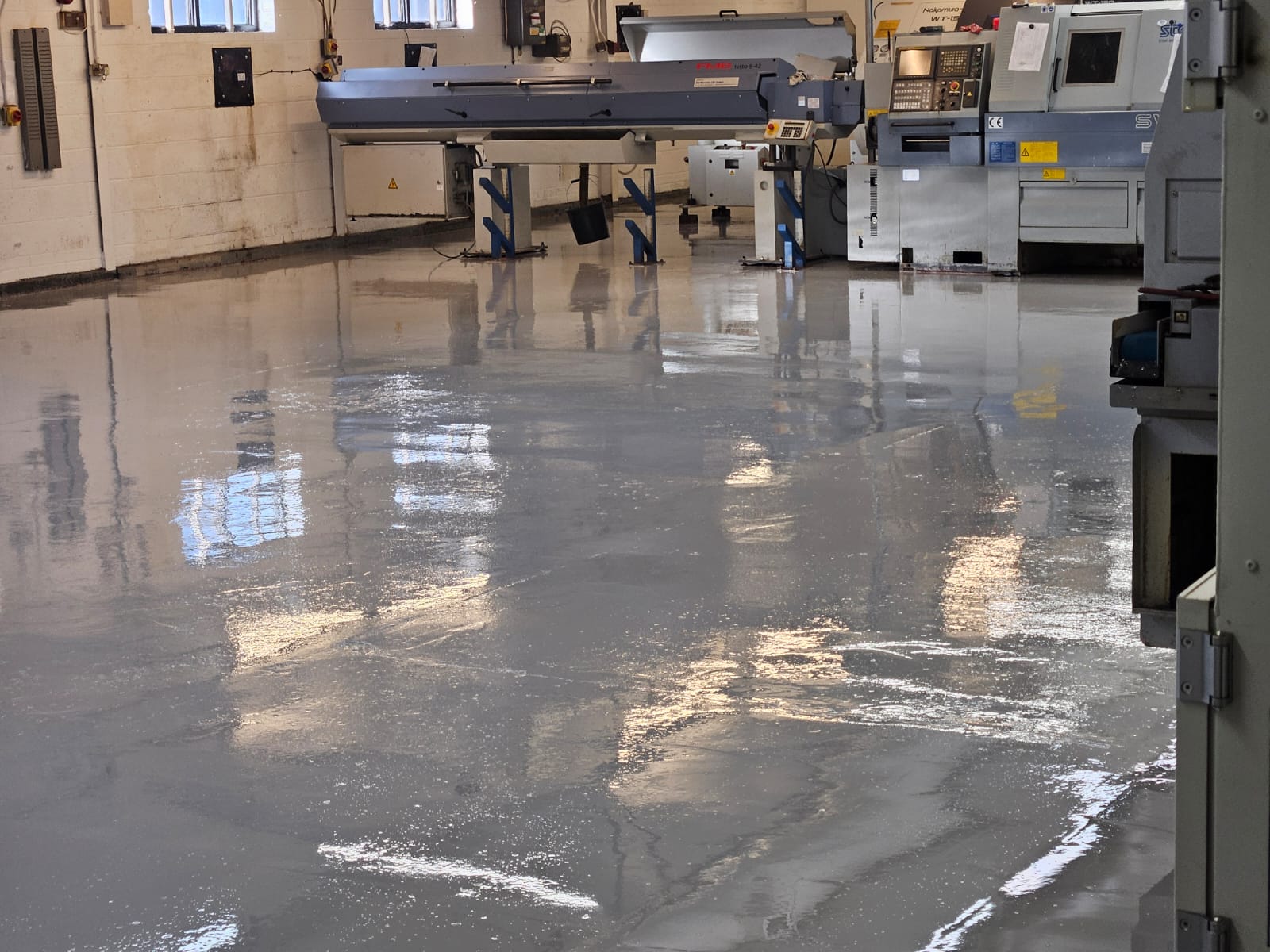
FRP Bund Lining Performance and Thickness
A typical chemical duty FRP bund lining is built to 3 to 6 mm laminate thickness, with each ply adding roughly 0.5 to 1 mm. Heavier duty installations, tanker offload bays, structural tank chamber linings and aggressive acid duty, run from 6 mm to over 10 mm, often with woven roving plies adding mechanical performance. Once cured, a properly consolidated laminate behaves as a monolithic, seamless barrier with measured permeation resistance, high impact strength and a service life that comfortably exceeds 25 years on most duties.
Compatible FRP and Lay Up Materials
Wet lay up makes specific demands on the resin: it has to be pourable, wet the glass out fully and bond between plies. From the ResChem range we typically apply:
Vinyl Ester Resins
The standard choice for GRP lining and fibreglass bund lining, combining strong wet out with the chemical resistance most lay up duties demand. It is what most operators mean when they specify a fibreglass bund lining.
Novolac Epoxy Resin
Used in lay up form where elevated temperature, concentrated acid or aggressive solvent exposure rules out vinyl ester. Slower to wet out, but the right answer for the most demanding chemical duties.
Epoxy Resins
For specialist FRP build ups where amine cure chemistry better suits the substrate or service, including some nuclear and pharmaceutical duties. Less common than vinyl ester but technically capable.
Polyurethane Resins and Polyurea Resins
Rarely used in glass mat lay up, because their cure profile and elastomeric behaviour do not reinforce reliably. We specify them for film build applications instead.
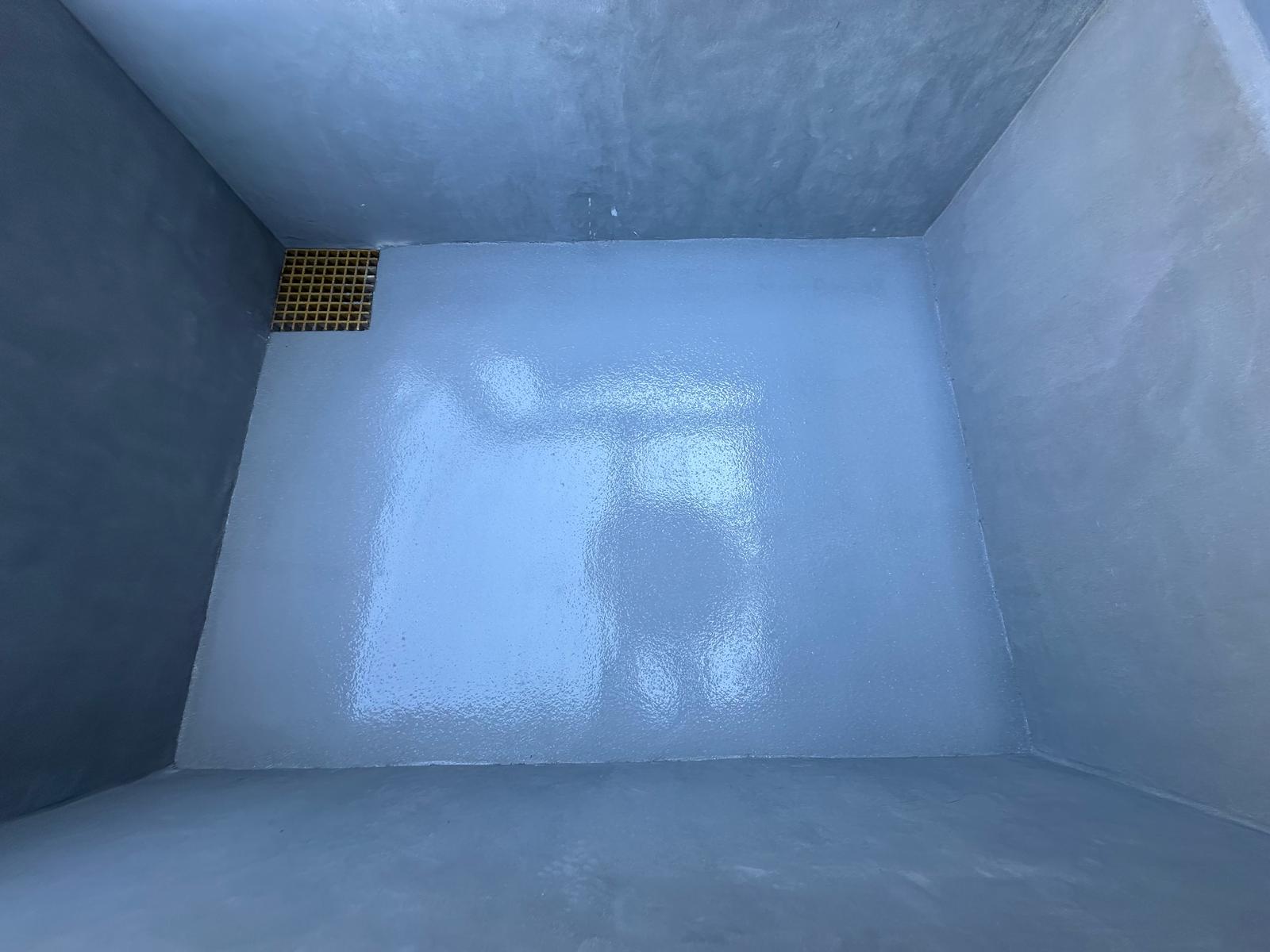
Advantages of Site Fabrication and Lay Up
Site Fabrication and Lay Up Limitations
Need a lay-up specified for a demanding bund?
Speak to Reschem about the right laminate build-up, resin choice and inspection regime for aggressive chemical duty, confined structures or long-life containment assets.
When to Choose Site Fabrication and Lay Up
Site fabrication and lay up is the build up of choice when one or more of these apply:
Aggressive Chemical Duty
Concentrated acids, oxidisers or solvents that a multi coat film cannot hold across the asset's design life.
Impact resistance needed
Mechanical performance is part of the design case, not just incidental.
Complex geometry
Too irregular, confined or bespoke for prefabricated GRP panels.
Long Service Life
Expectations of 20 years and beyond, where downtime for recoating is unacceptable.
GRP Standard Assets
A tank chamber, fill point manhole or sump where FRP or GRP is the established standard.
Structural reinforcement needed
Tying together a cracked substrate or supporting hydrostatic load.
FRP Bund Lining Applications and Industries
Site fabrication and lay up is the standard approach across several sectors and structure types:
Oil, Gas and Petrochemical
Tank chamber linings at terminals and depots, where grp bund linings are the long-established specification.
Chemical Processing
Acid bunds, reaction vessel surrounds and aggressive process drainage where film coatings cannot perform.
Sewage and Waste Water Treatment
Biogenic acid duty in digester gas zones, sewer corbels and rising main soffits, where FRP performance is the design case.
Nuclear Facilities
Active drainage trenches and certain HF-compatible duties using carbon-filled vinyl ester laminates.
Agriculture & Aquaculture
Slurry stores, AD plant bunds and aquaculture tanks where mechanical and chemical demand combine.
Power Generation and Transmission
Chemical regen plant bunds at thermal generation sites and demin water plant linings.
Food & Beverage
Selectively, on heavy-duty acid CIP areas and trade effluent compounds where film coatings would not survive.
Site Fabrication Surface Preparation Requirements
FRP Lay Up Quality Assurance and Testing
Site Fabrication and Lay Up FAQs
Yes, hand lay-up is particularly well suited to confined and restricted access work, since the materials are brought in by hand and laid manually rather than relying on large spray plant. Adequate ventilation and DSEAR-compliant controls are essential, especially for vinyl ester and polyester systems with styrene emissions.
Inter-laminar voids, dry glass and trapped air create planned failure points within the laminate, leading to blistering, delamination and premature loss of containment. These defects are usually invisible at handover and only show up under hydrostatic test or in service, which is why consolidation discipline and inspection between plies matter so much.
A correctly specified and applied FRP/GRP lay-up typically delivers 25+ years of service on most chemical and mechanical duties. Aggressive acid and elevated-temperature applications sit at the lower end of that range, with planned re-coats or surface veil renewals extending overall asset life.
Lay-up systems are straightforward to repair. Damaged areas are ground back, feather-edged into sound laminate, and re-laminated using the same resin and reinforcement. Repairs bond chemically into the existing structure rather than sitting as a separate patch, which is one of the key practical advantages of FRP bund lining over coatings.
Yes, vinyl ester and novolac epoxy lay-up systems are designed exactly for this duty, and outperform most alternatives in concentrated acid, oxidising and elevated-temperature service. Resin selection has to be matched to the specific chemistry and temperature, and a chemically resistant surface veil is normally specified as the final ply.
A small bund or sump typically takes three to seven working days including preparation, priming, multiple plies and full cure. Larger tank chambers and offload bays run from two to three weeks depending on geometry, ply count and access, and rapid-cure resin systems can compress the programme where the operator can absorb a shorter outage rather than a longer one.
Featured Case Studies

Get Independent Expert Advice
Speak to our technical specialists about your bund lining requirements. Free, no-obligation site surveys available nationwide.
