Build-Up Methods

Epoxy Resins Bunds

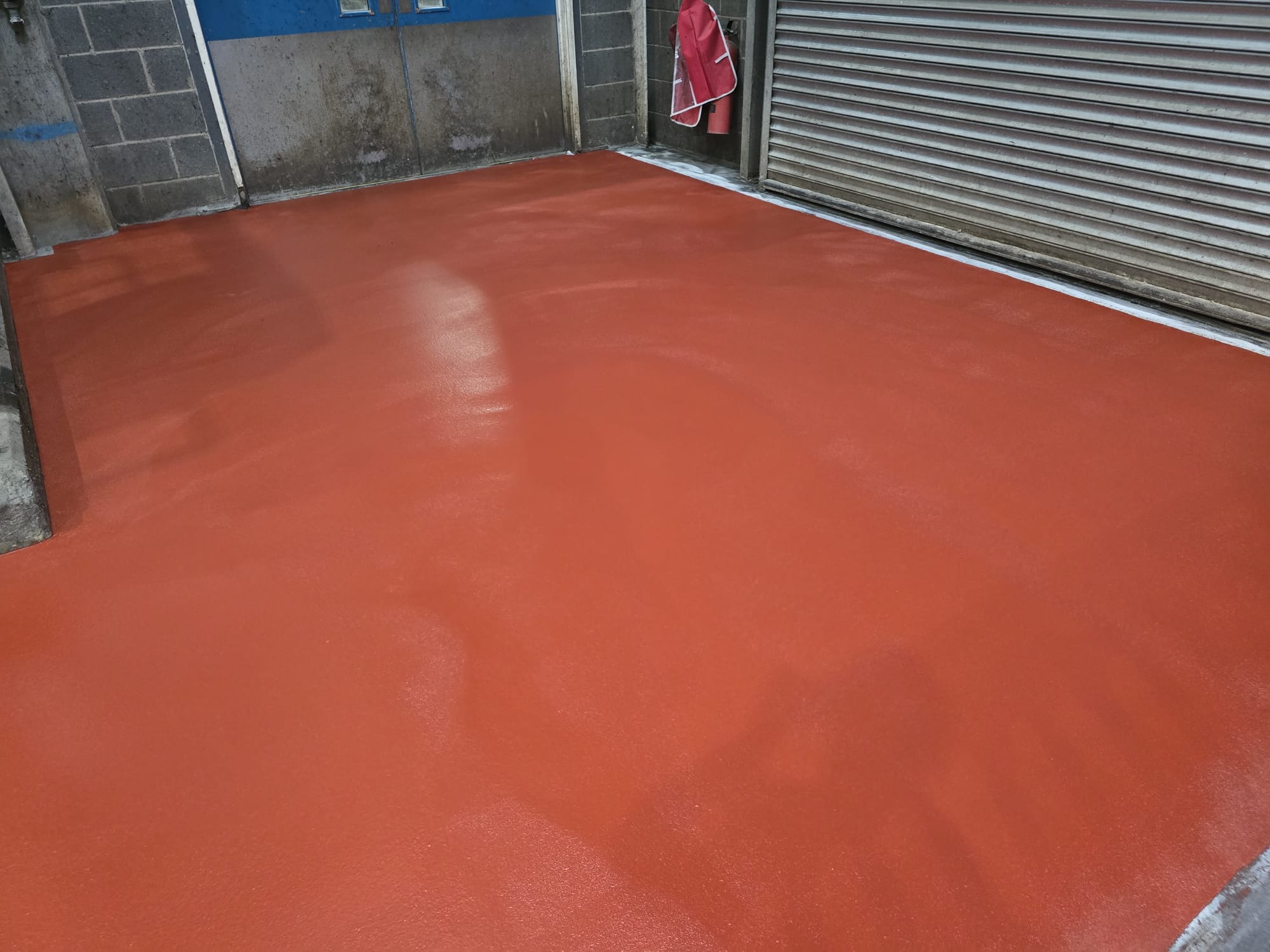
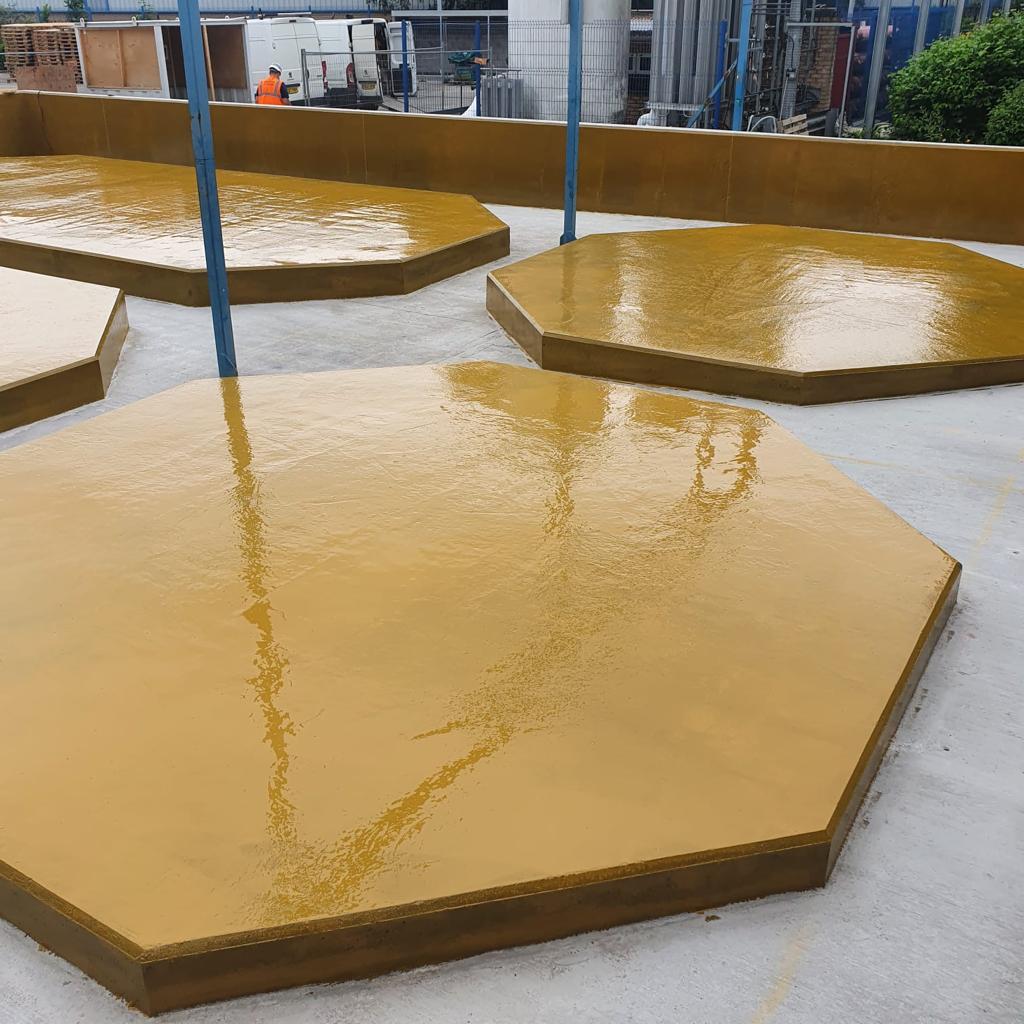
Epoxy resin is the workhorse of UK bund lining. This material has a two-part thermosetting chemistry that cures into a hard, chemically resistant film bonded to concrete or steel. We specify epoxy resin lining across most bund duties because it delivers reliable performance, predictable behaviour and sound whole-life cost.

Overview

What Is Epoxy Resin?

Epoxy resin is a two component thermosetting polymer: a liquid base from bisphenol A or bisphenol F, mixed with an amine, polyamide or amidoamine curing agent. The two react into a cross linked, three dimensional network, and the cure is irreversible, which is why a cured epoxy bund lining ends up far tougher and more chemically resistant than paint. Typical figures: Shore D 75 to 85 hardness, over 1.5 N/mm² pull off adhesion, 60 to 80°C wet service and 100 to 120°C dry, and an impermeable barrier at 0.5 to 2 mm dry film thickness.

Types of Epoxy Resin Bund Systems

  • Solvent-free epoxy: the modern default for most bund lining work, with no VOC and good build per coat.
  • High-solids epoxy: slightly thicker per coat than solvent-free, used where film build at moderate thickness is the priority.
  • Water-based epoxy: for light-duty applications and environments where solvent and VOC restrictions rule out other systems.
  • Phenolic-modified epoxy: uprated chemical resistance, particularly for hot water and dilute solvent service, sitting between standard epoxy and novolac.
  • Self-smoothing and self-levelling epoxy: pourable formulations used as substrate levelling layers and as low-build floor finishes.
  • Trowel-applied epoxy mortar: heavily filled, high-build systems used for screeds, repairs and heavy-duty bund flooring.
  • 100% solids epoxy: premium chemistry with full reactive content, used where the highest film integrity and chemical performance are needed.
  • Novalac epoxy: premium chemistry in epoxy resins, uprated for hot acid, hot solvent and elevated-temperature service that standard epoxy resin lining cannot reliably hold.

Epoxy Resin Bund Key Features

Chemical resistance: sound performance against hydrocarbons, dilute acids and alkalis, salts, water and most routine industrial chemistry.
Mechanical strength: high compressive and tensile strength once cured, with good resistance to abrasion, impact and point loading.
Adhesion: reliable bond to prepared concrete and steel substrates, supporting hydrostatic loading and long-term service without debonding.
Hardness: Shore D in the 75–85 range, giving a hard wearing surface that resists daily traffic and cleaning.
Service temperature: typically up to 60–80°C in continuous wet duty, with higher tolerance in dry service.
Impermeability: a measurably continuous barrier at standard build thickness, holding chemistry without permeation across the asset's design life.
Build flexibility: can be applied at thicknesses from 250 microns to 25 mm depending on the system, allowing the same chemistry to be specified across coatings, mortars and screeds.

Epoxy Resin Bund Applications

  • Oil, Gas and Petrochemical: fuel storage bunds, plant rooms, tanker offload areas and lubricant stores, where reliable hydrocarbon resistance is the design case.
  • Power Generation and Transmission: transformer bunds, generator compounds, plant rooms and standby fuel storage across DNO, transmission and renewables sites.
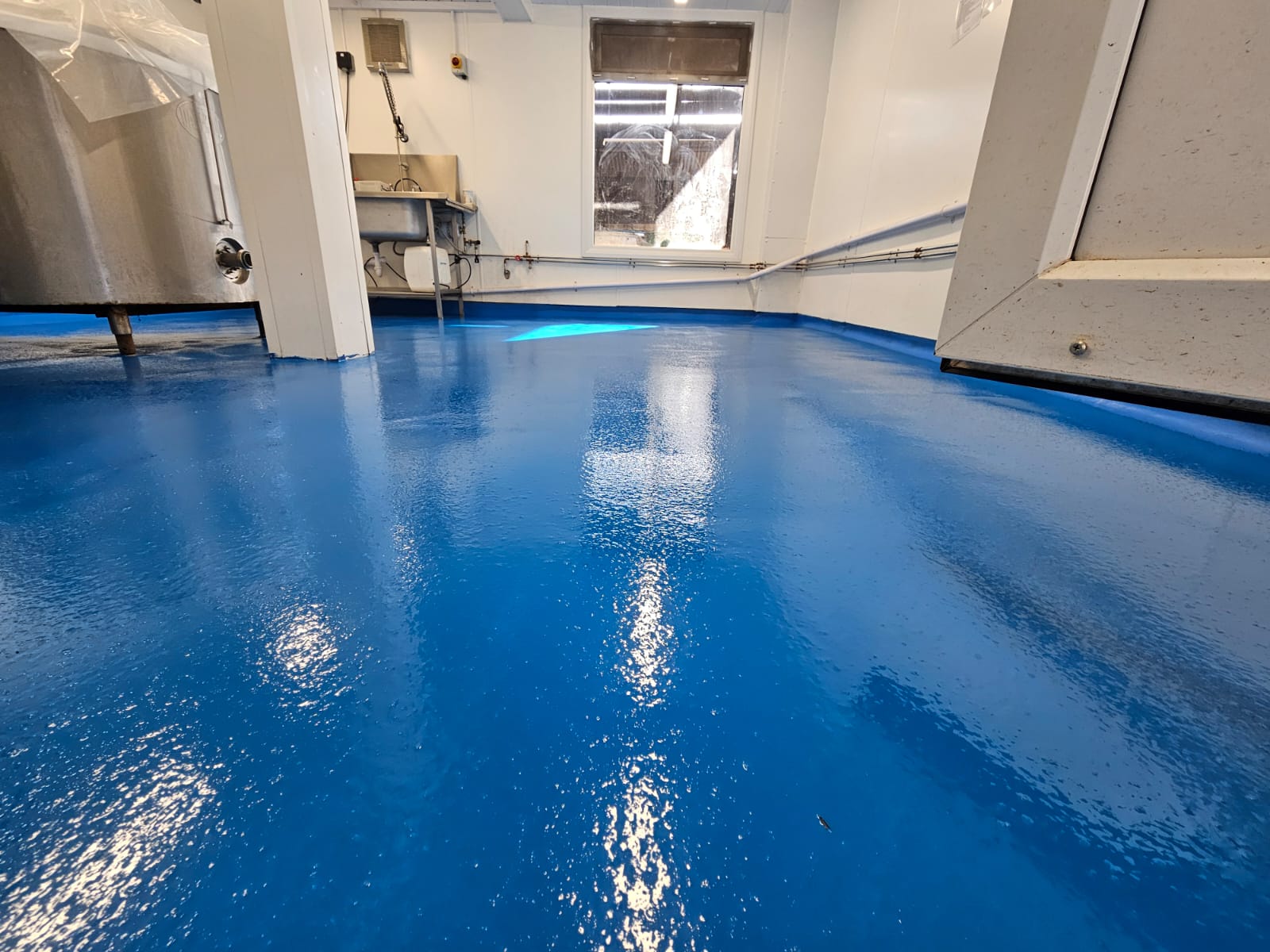
  • Food & Beverage: production floor bunds, ingredient stores and CIP areas, with hygienic topcoats specified for daily wash-down.
  • Chemical Processing: utility and ancillary bunds, dosing skids and reagent stores where chemistry sits within the epoxy envelope.
  • Sewage and Waste Water Treatment: reagent stores, plant rooms and lower-risk treatment plant bunds outside the most aggressive BSA zones.
  • Agriculture & Aquaculture: fertiliser bunds, fuel oil compounds and routine farm assets where chemistry is moderate.
  • Nuclear Facilities: qualified, BS 4247-compliant epoxy systems on active-area floors, support areas and inactive bunds.
PROFILE

Epoxy Resin Bund Chemical Resistance Profile

Epoxy handles a wide range of chemistry well, but it is not a universal answer. In broad terms:

Epoxy Resin resists well against:

  • Hydrocarbons. Diesel, kerosene, lube oils, fuel oils and most lubricants
  • Dilute mineral acids up to roughly 10–30% concentration depending on the system
  • Dilute alkalis and most caustic chemistry at moderate strength
  • Water, brine and most aqueous salt solutions
  • Light hydrocarbon solvents and refined oil products

Epoxy Resin has limitations against:

  • Concentrated mineral acids above ~50%, particularly nitric and sulphuric, where vinyl ester or novolac is the better answer
  • Strong oxidising chemistry, including hypochlorites at concentration and hot peroxyacetic acid
  • Polar solvents at concentration dichloromethane like DMF and acetone which soften and dissolve standard epoxies
  • Hot caustic, where elevated temperature combines with alkali attack
  • Hydrofluoric acid, where rubber bunding or carbon-filled vinyl ester laminates are specified instead
Methods

Epoxy Resin Bunds Build Up Methods

Lining and Levelling

Epoxy screeds and self-levelling underlayments are the default substrate preparation layer beneath most bund linings.

Protective Coatings

Multi-coat epoxy films are the most widely installed bund lining build-up in the UK.

Bund Lining Repairs

Epoxy systems are the most common repair chemistry, used to match the majority of existing bund linings in service.

Trowel Applied Mortar Systems

Heavily filled epoxy mortars are the standard heavy-duty system for industrial bunds with mechanical loading.

Surface Preparation

Every epoxy specification is preceded by preparation tuned to the chosen system.

Site Fabrication

Selectively, where amine-cure epoxy chemistry better suits the substrate or service than a vinyl ester lay-up.
Requirements

Epoxy Resin Bunds Surface Preparation Requirements

  • Air temperature: typically 10–25°C, with cold-cure formulations available for work down to 5°C.
  • Substrate temperature: at least 3°C above dew point, monitored continuously across the working day.
  • Relative humidity: usually below 85%, with moisture-tolerant systems available for damper conditions.
  • Pot life: typically 30–60 minutes once mixed, shortening rapidly in warm conditions.
  • Recoat window: 8–24 hours between coats depending on the system; missed windows require mechanical keying.
  • Cure time: walk-on hardness typically 12–24 hours, full chemical cure 5–7 days.
  • Application equipment: brush and roller for small areas, airless spray for larger floors and walls, trowel for mortar systems.
  • Mixing discipline: exact ratio mixing, mechanical agitation and clean equipment, with side-and-bottom scraping to ensure full incorporation of the curing agent.
Requirements

Epoxy Resin Bunds Surface Preparation Requirements

A well-applied epoxy is only as good as the substrate beneath it. Our standard preparation requirements are:

Concrete substrates

Abrasive blasted, scabbled or diamond ground to ICRI CSP 3–5, with all laitance, oils and unsound concrete removed.

Steel substrates

Abrasive blasted to SA 2.5 (near-white metal), primed within the manufacturer's specified window before flash rust forms.

Moisture content

Concrete moisture below 4% by weight (or as specified by the system manufacturer), verified by hygrometer or calcium chloride testing.

Detail repair

Cracks, blowholes and broken arrises reinstated with compatible polymer mortar before priming.

Cleanliness

Dust extracted, oils degreased and the surface presented dry, sound and contamination-free for priming.

Priming

Penetrating epoxy primer matched to the chosen body coat, applied at the manufacturer's specified rate and recoated within window.

Benefits

Epoxy Resin Bunds Advantages and Limitations

We position epoxy honestly so the right chemistry can be specified for each duty:

Advantages

  • The most application-flexible chemistry in the bund lining range, suitable for coatings, mortars, screeds and repairs
  • Reliable, predictable performance across most general industrial chemistry
  • Excellent adhesion to concrete and steel substrates
  • Sound mechanical strength, hardness and wear resistance
  • Wide market availability, easy specification and straightforward sourcing
  • Cost-effective across whole-life, with 15–25 year service life on most duties
  • Straightforward to repair and overcoat using compatible epoxy systems

Limitations

  • Rigid once cured, with limited crack-bridging across moving substrates
  • UV exposure causes chalking and colour fade, though performance generally holds — UV-stable polyurethane topcoats are specified for external duty
  • Limited resistance to concentrated acids, oxidisers and polar solvents at high concentration
  • Service temperature ceiling lower than novolac epoxy; not the right chemistry for hot acid or hot solvent duty
  • Sensitive to moisture and temperature during application — outside the working envelope, cure is compromised
  • Pot life can be short in warm conditions, limiting the workable window per batch
Get Expert Advice

Speak to a Specialist

Our technical team can advise on the right system for your project.

Comparison

How Epoxy Resin Bunds Compare to Other Systems

  • Versus Polyurethane Resins — epoxy is harder and more chemically resistant; polyurethane is more flexible, more UV stable and better at thermal cycling. We often pair them, with an epoxy body coat and a polyurethane topcoat, to combine both.
  • Versus Polyurea Resins — epoxy is conventional cure with a multi-coat build, slower but more cost-effective; polyurea is rapid spray-applied, returning the bund to service inside hours but at higher capital cost and with less variant flexibility.
  • Versus Vinyl Ester Resins — epoxy handles general industrial chemistry; vinyl ester handles concentrated acids, oxidisers and FRP/GRP lay-up duty that epoxy cannot reliably hold. Vinyl ester is the natural step-up for any meaningful acid bund.
  • Versus Novolac Epoxy Resin — standard epoxy is the default for moderate chemistry; novolac is the uprated version for elevated temperature, concentrated acid and aggressive solvent duty where standard epoxy would soften.
Frequently Asked Questions

Epoxy Resin Bunds FAQs

A correctly specified, properly applied and well-maintained epoxy resin bund lining typically delivers 15–25 years of compliant service. Heavily trafficked floors, hot-service areas and aggressive acid bunds sit at the lower end of that range, while standard hydrocarbon and food-area duty regularly reaches the upper end.

Our Work

Featured Case Studies

View all projects
Get Independent Expert Advice

Get Independent Expert Advice

Speak to our technical specialists about your bund lining requirements. Free, no-obligation site surveys available nationwide.