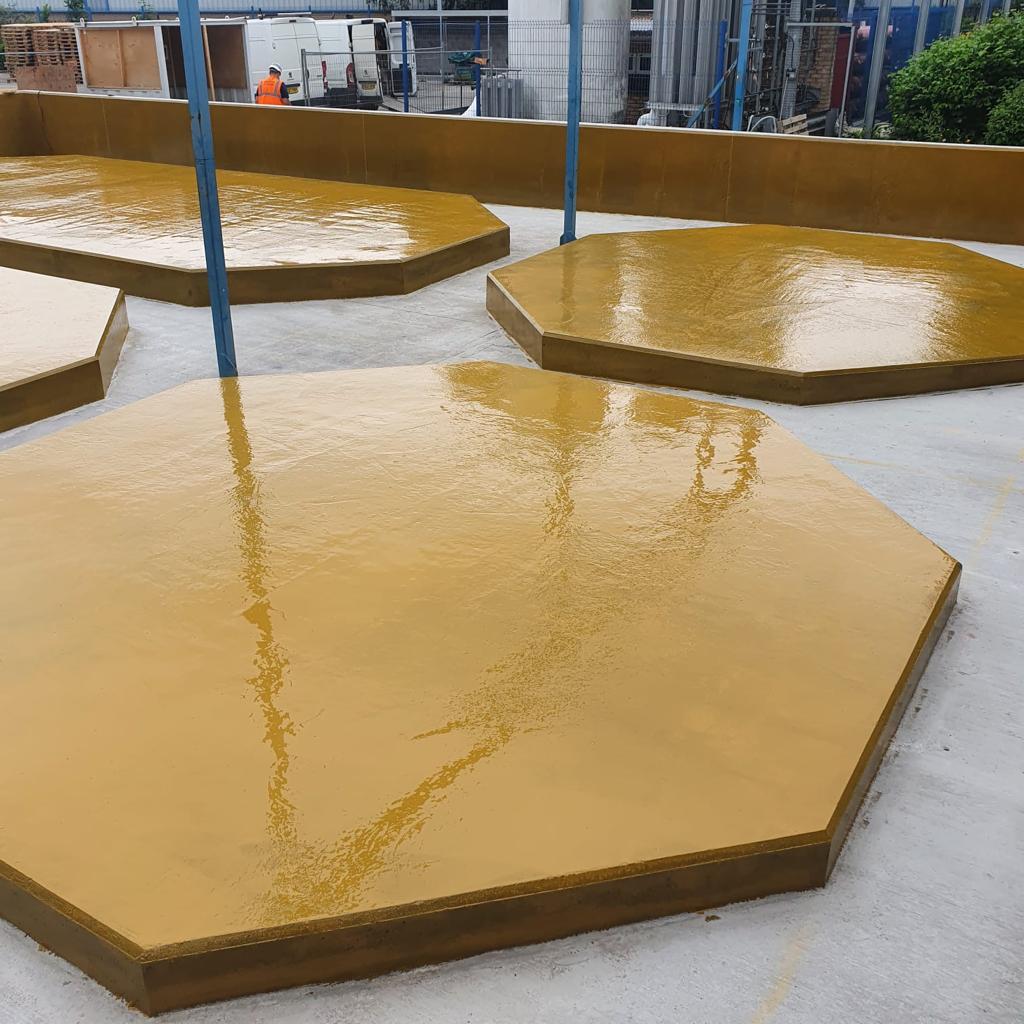

Power Generation & Transmission
In power generation and transmission, bund lining is the chemically resistant, fire-aware barrier that turns concrete transformer bunds, generator compounds and plant room floors into compliant oil containment.
Key Bund Lining Challenges in Power Generation and Transmission
Power generation and transmission sites require robust bund lining systems to contain transformer oils, prevent environmental contamination and maintain integrity under demanding operating conditions. Transformer bunds must resist hot oil exposure and integrate with drainage, fire protection and wider substation infrastructure.The challenges that shape every specification we write in this sector include:
When Is This Required?
Power Generation & Transmission Common Applications
Power sites carry a wider range of bunded assets than most operators realise and well beyond the headline transformer oil bund. Common applications we line include:
Outdoor 132 kV, 275 kV and 400 kV transformer bunds, including grid supply points and transmission substations
Indoor and GIS substation transformer plinths and bund floors
Distribution transformer bunds at primary and secondary substations
Stone-filled transformer bunds with oil-and-water drainage to oil-water separators
Tap changer pits, cable trench transitions and marshalling kiosk bases
Generator transformer (GT) and station transformer (ST) bunds at thermal, gas and hydro plants
Turbine hall lube oil systems, governor oil bunds and seal oil compartments
Standby diesel generator compounds at substations, data centres and critical national infrastructure
Bulk fuel oil and diesel storage compounds at peaking plants and OCGT facilities
BESS containers and battery storage compound bunds, including Li-ion fire-aware containment
Wind turbine base bunds, offshore substation modules and onshore export cable transition compounds
Solar farm inverter and central inverter bunds
Demin water plant, ion exchange regeneration bunds and boiler feedwater dosing skids
Cooling tower basins, condenser bays and circulating water compounds
HV switchgear oil drip trays and oil-filled switchgear bunds (legacy assets)
Power Generation & Transmission Regulatory and Compliance Obligations
Power generation and transmission sits under a layered regulatory framework that combines environmental, electrical safety and asset-specific obligations. The principal references we design to are:
The Electricity Safety, Quality and Continuity Regulations 2002 (ESQCR)
The foundation of network operator safety duties, including containment-related provisions for oil-filled plant.
The Energy Networks Association (ENA) Engineering Recommendations
Including ER G99 and ER G83/G99 for connection, plus a wide library of technical specifications applied to substation civils.
ENA Technical Specifications (TS)
The design and construction standards used by every UK DNO and TO for substation infrastructure, including bund design and oil containment systems.
BS EN 61936-1
Power installations exceeding 1 kV AC, which sets out the headline containment expectations.
BS EN 50522
Earthing of power installations, relevant to bund interfaces with the earth grid.
IEC 60076 series
Power transformers, including the operational data that drives transformer bund requirements.
The Control of Pollution (Oil Storage) Regulations and Environment Agency PPG2
The environmental controls on oil-filled assets.
COMAH
Applicable wherever transformer oil thresholds, diesel storage or other dangerous substances exceed lower-tier or upper-tier limits at a site.
HSE HSG176
Storage of flammable liquids in tanks, applied to standby diesel and fuel oil compounds.
DSEAR
Relevant to hydrogen-cooled generators, gas turbine fuel handling and battery hazard zones.
CIRIA C736
Practical industry guidance on bund design, capacity and detailing.
National Grid, SSE, SP Energy Networks, UK Power Networks and Northern Powergrid
Technical standards — operator-specific specifications that almost always apply alongside the above.
Power Generation & Transmission Recommended Lining Systems
Resin selection in power generation and transmission is driven by hot oil exposure, UV stability, fire performance and the realities of working on live plant. Our typical palette is:
Epoxy Resins
The workhorse for transformer bunds, plant room floors and indoor switchgear compartments, where mineral oil resistance, sound adhesion to concrete and predictable performance through outage windows make them the reliable default.
Polyurethane Resins
The natural choice for outdoor substations exposed to UV, freeze-thaw and thermal cycling. PU systems hold colour and flexibility through British weather, and are particularly well suited to stone-filled bund peripheries and external transformer bund walls.
Polyurea Resins
Rapid-cure systems for very short outage windows, where a transformer bund or generator compound must be back in service inside a planned weekend. Their tough, impact-resistant finish also suits maintenance bays and access bay floors.
Vinyl Ester Resins
Specified at chemical regeneration plants, demin water bunds and ion exchange areas where strong acid or caustic regenerants are handled, rather than on transformer bunds themselves.
Novolac Epoxy Resin
Uprated chemistry for hot lube and seal oil exposure on turbine skids, hot ester fluid release scenarios on modern transformers, and elevated-temperature bunds at thermal generation plants.
Speak to a Specialist
Our technical team can advise on the right system for your project.
Power Generation & Transmission FAQs
Yes. We line reinforced concrete bunds, steel transformer plinths and steel-shelled compounds routinely, with primer and topcoat chemistry matched to each substrate. Earth bunds are not directly lined and where earth-bund containment is required, a concrete or geomembrane sub-structure is built first and that surface receives the lining.
A correctly specified transformer bund lining typically delivers 15–25 years of compliant service under UK substation conditions. Outdoor exposure, UV degradation and the chemistry of any hot oil release event can pull that figure shorter, with detail and joint sealants needing replacement every 7–10 years.
This is often the case, yes. Most substation work is staged into planned outages or carried out on the duty/standby pair, with rapid-cure polyurea systems returning a transformer bund to service inside 24 to 48 hours. Live working alongside energised plant is co-ordinated with the operator’s permit-to-work and earthing regime throughout.
Outdoor substation transformer oil containment demands UV-stable polyurethane or aliphatic topcoats, freeze-thaw-tolerant chemistry, crack-bridging across thermally cycled concrete and detailed top-of-wall terminations to shed rainwater. The system also needs to cope with the temperature gradient between sun-warmed outer faces and cooler inner faces of a transformer bund wall.
The bund lining is sealed continuously through every drainage outlet to a normally closed valve, with falls engineered so oil collects locally and water discharges via the oil-water separator only after manual inspection. Penetration collars at the OWS pipework are detailed to the same standard as the main lining so the integrity of the containment system is maintained at every joint.
The bund is a primary fire-control measure: it holds released oil locally so a pool fire cannot migrate to cable trenches, control buildings or adjacent transformers. A fire-aware lining keeps the bund’s containment volume intact under thermal load long enough for fire suppression and oil recovery to take effect.
Run a visual inspection annually as a minimum, with additional checks following any transformer fault, oil release or maintenance operation that could have damaged the bund. Hydrostatic or wet testing intervals follow the operator’s asset management policy and any environmental permit conditions, and are typically aligned with planned transformer outages every 3–6 years.
Featured Case Studies