
Nuclear Facilities
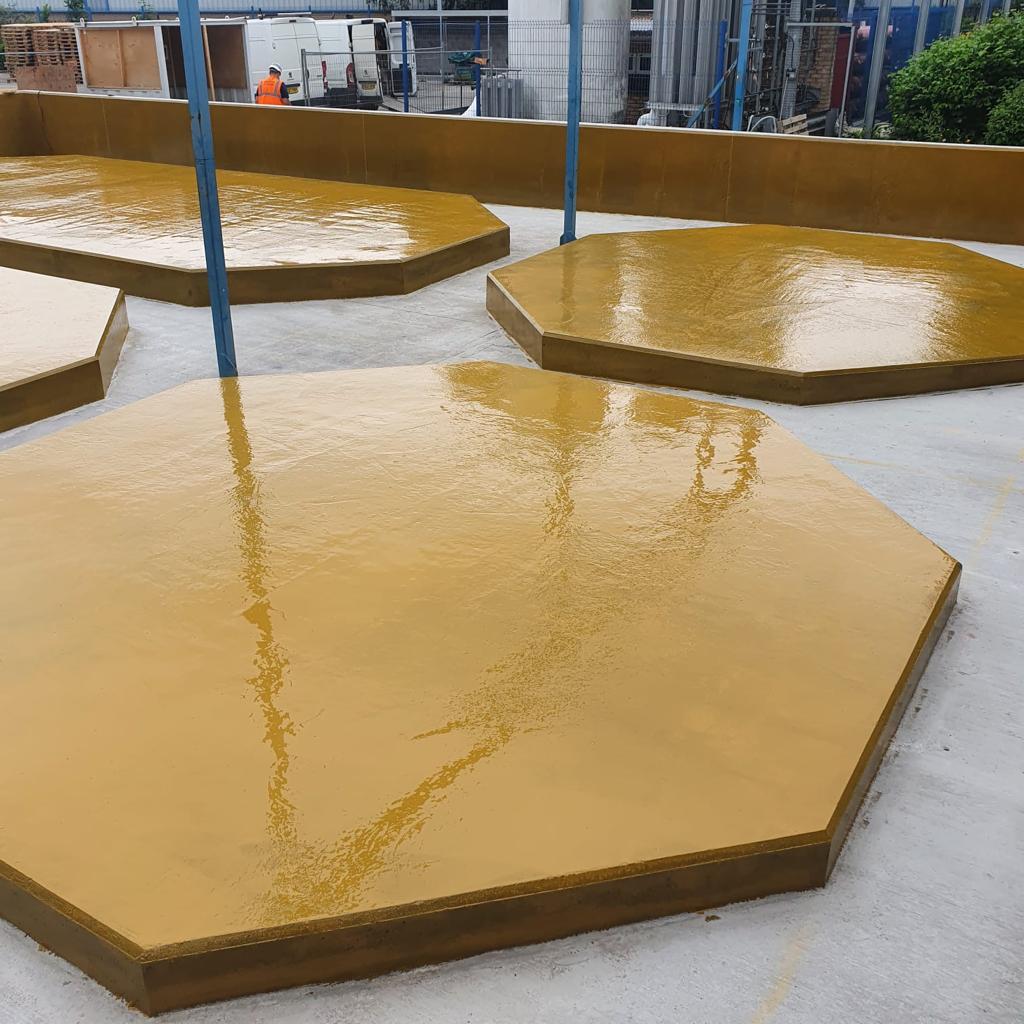
In nuclear facilities, bund lining is the decontaminable, chemically resistant barrier that supports radioactive containment, active effluent handling and waste storage across operational and decommissioning sites.
Key Bund Lining Challenges in Nuclear Facilities
Nuclear facilities require the highest standards of bund lining, combining resistance to aggressive process chemicals with strict radiological controls. Containment systems must be designed, installed and documented under rigorous regulatory requirements, where containment integrity forms a critical part of the nuclear safety case.The challenges that shape every nuclear specification we write include:
When Is This Required?
Nuclear Facilities Common Applications
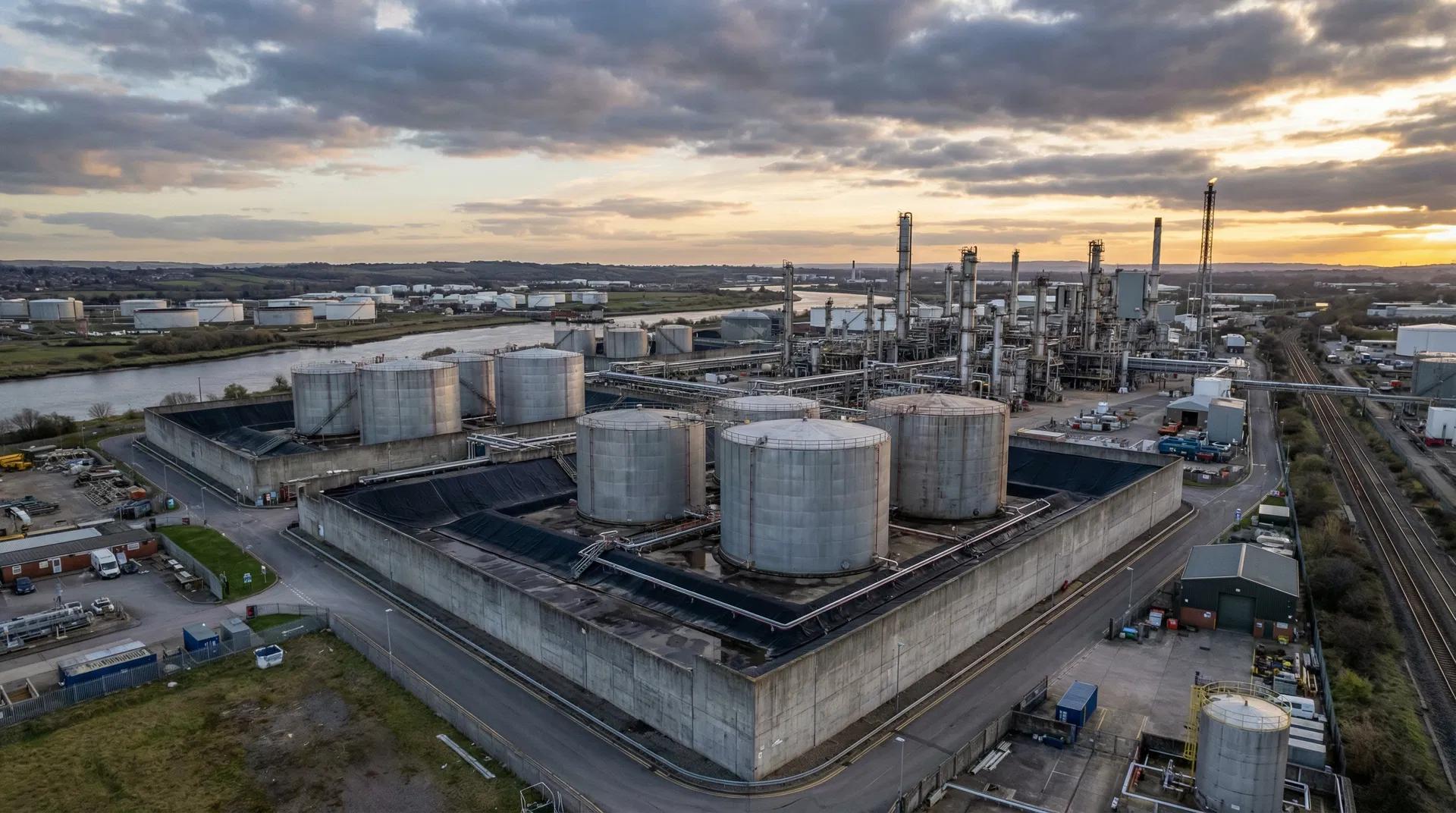
Nuclear sites carry an unusually wide spread of bunded and lined assets across power generation, fuel cycle, waste management and decommissioning. Common applications we line and re-line include:
Active effluent and process drainage trenches inside reactor and reprocessing buildings
Cell linings in active handling cells, including alpha and beta-gamma cells
Glovebox stand bunds, undertray linings and surrounding floor coatings
Active drains, sumps and active drainage corridor floors
Liquid effluent treatment plant bunds. These include at SIXEP, EARP and similar effluent treatment systems
Fuel storage pond walls, floors and surrounds (Magnox, AGR and PWR-style ponds)
Wet and dry intermediate-level waste (ILW) store floors, vaults and stillage areas
Low-level waste (LLW) conditioning and packaging facility floors
Sludge retrieval and conditioning plant bunds
Reagent and chemical dosing bunds for nitric acid, sodium hydroxide, complexants and decontamination chemistry
Diesel and lube oil bunds for emergency diesel generators (EDGs) and standby plant
Active maintenance bay and decontamination workshop floors
Health physics access corridors, change rooms and step-off mat zones
Decommissioning yard hardstanding and free-release area floors
Nuclear Facilities Regulatory and Compliance Obligations
Nuclear bund lining sits under the most onerous regulatory framework of any UK sector. Specifications and application records are written to support the licensee’s nuclear safety case from day one. The principal obligations and references we design to are:
The Nuclear Installations Act 1965 and The Nuclear Installations Regulations 2018
The foundation for licensed site duties.
The 36 Site Licence Conditions (LCs) issued by the Office for Nuclear Regulation (ONR)
Particularly LC 14 (safety documentation), LC 22 (modifications), LC 23 (operating rules), LC 27 (safety mechanisms, devices and circuits) and LC 28 (examination, inspection, maintenance and testing).
The ONR Safety Assessment Principles (SAPs) and Technical Assessment Guides (TAGs)
The working framework for justifying lining specifications on active assets.
BS 4247
Decontaminable surfaces, the headline standard for active-area floor and bund finishes.
BS 5775
The legacy reference for nuclear-grade coatings, still cited in many site specifications.
The Ionising Radiations Regulations 2017 (IRR17)
Radiological protection duties for everyone working on the lining.
The Environmental Permitting Regulations
As applied to RSR (Radioactive Substances Regulation) — covering authorised discharges and waste arisings from any lining operation.
NDA contract conditions
And site-specific specifications for Sellafield, Dounreay, Magnox sites and LLWR — typically tighter than the underlying national standards.
NSAN, Fit For Nuclear (F4N) and NIA
Supplier competence frameworks — the de facto entry requirements for nuclear-sector work.
CIRIA C736
The wider UK reference for bund design, applied alongside the nuclear-specific framework.
Nuclear Facilities Recommended Lining Systems
Resin selection in nuclear is driven by the combination of decontaminability, radiation stability, process chemistry and the radiation dose the lining will accumulate across its design life. Our typical palette is:
Epoxy Resins
The workhorse for active-area floors, cell linings, glovebox surrounds and active drainage corridors. Modern nuclear-grade epoxies meet BS 4247 decontaminability and tolerate substantial accumulated gamma doses without losing integrity.
Polyurethane Resins
Selected for outdoor decommissioning yards, fuel store roofs, gantry decks and exposed bunds where UV stability and thermal cycling dominate, rather than for first-line active containment.
Polyurea Resins
Rapid-cure systems used where active-area access windows are very short and the work has to be completed and contamination-checked inside a single operation. Particularly valuable on dose-critical assets where prolonged occupancy is not acceptable.
Vinyl Ester Resins
The chemistry of choice for concentrated nitric acid duty in reprocessing-derived effluent, dissolution areas and oxidising regenerant streams, with carbon-filled formulations available for hydrofluoric acid containment.
Novolac Epoxy Resin
Uprated chemistry for hot acid exposure, mixed waste sumps, complexant-handling areas and the most demanding active drains, where standard epoxy formulations would be chemically degraded.
Speak to a Specialist
Our technical team can advise on the right system for your project.
Nuclear Facilities FAQs
A correctly specified and maintained nuclear bund lining typically delivers 15–25 years of compliant service, comparable to other sectors but assessed against accumulated radiation dose and decontaminability rather than wear alone. Active areas are usually re-coated earlier as part of planned outage and decommissioning programmes, regardless of measured condition.
In inactive support areas, yes. Work is staged around plant access in the same way as any industrial site. In active areas, lining work is almost always tied to a planned outage and a permit-to-work, with rapid-cure systems used where dose-uptake constraints make extended occupancy unacceptable.
Inspection frequencies are set by the site’s Licence Conditions and operating rules, typically annual at minimum and more frequent for active drainage, ponds and effluent treatment bunds. Every inspection generates a documented record that forms part of the asset’s compliance evidence under LC 28.
Materials for active-area use are qualified against an accumulated gamma dose representative of the design life, typically expressed in kGy, with mechanical, chemical-resistance and decontaminability properties confirmed before and after irradiation. Qualification dossiers are prepared in line with BS 5775 and site-specific specifications, and submitted to the licensee’s design authority before any active application.
BS 4247-compliant linings have a smooth, gloss, low-porosity finish, coved fillets at every wall and floor junction, no internal corners or crevices, and seamless transitions through every penetration and joint. Detail design eliminates dirt traps and surface texture so contamination releases under standard wash-down and decontamination procedures.
Repair work is carried out under permit-to-work with health physics monitoring, contamination controls and HEPA-filtered extraction, and the cut-out lining is bagged and routed to the appropriate radioactive waste stream. Substrate decontamination is verified before primer is applied, and the new lining is documented and surveyed back into service through the licensee’s post-job hold point.
Carbon-filled vinyl ester systems are the standard choice for HF containment because the resin chemistry resists fluoride attack and the filler is non-reactive with HF. Silica-based fillers must be avoided, as HF reacts with silica to form silicon tetrafluoride and undermine the lining from within. Therefore, filler selection is as important as the resin itself.
No, they are different controls with different purposes. Bund lining is a chemically resistant, decontaminable surface that contains liquid and supports radioactive containment integrity, whereas shielding is dense material (concrete, steel, lead) engineered to attenuate radiation; the two are designed and specified separately and sit alongside one another on the same asset.
Featured Case Studies