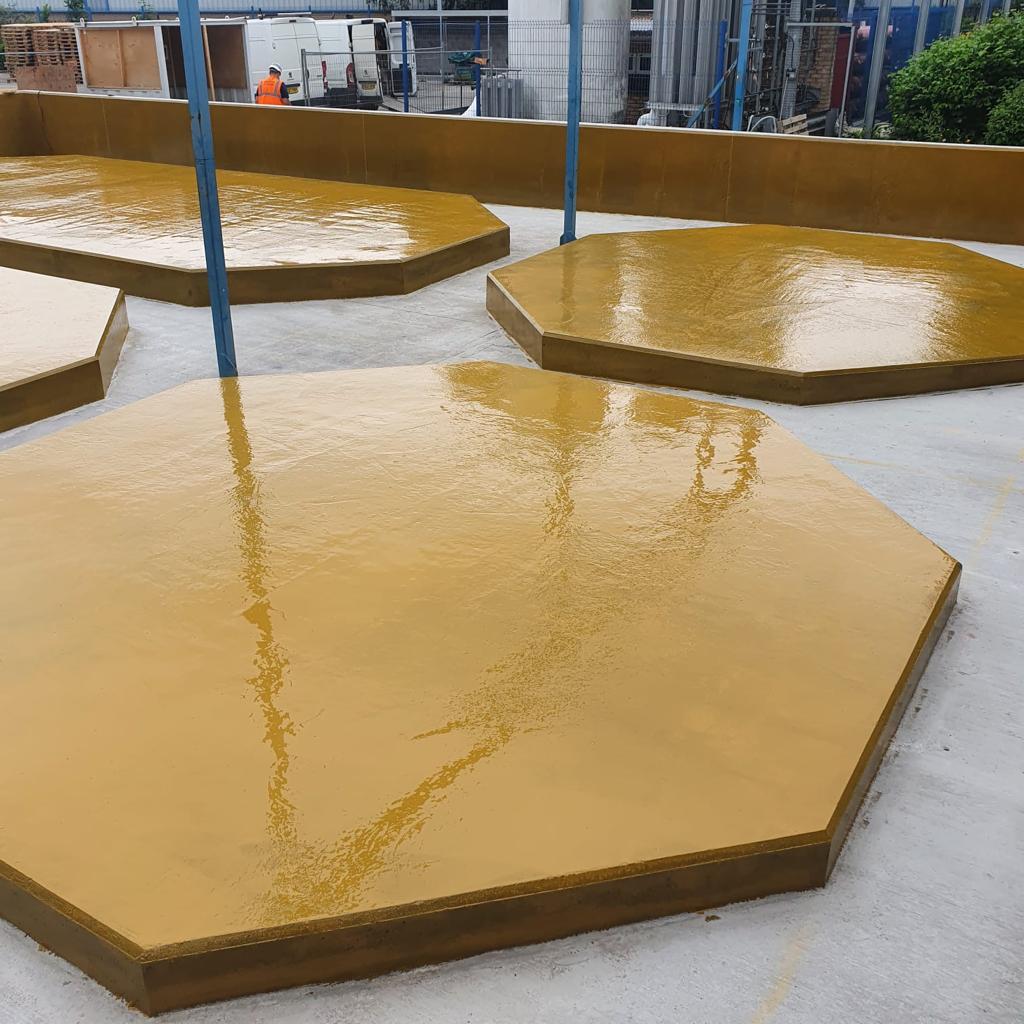

Data Centres & Utilities
In data centres and utilities, bund lining is the chemically resistant, fire-aware barrier that contains standby diesel and HVO, battery electrolyte, glycol coolants and dielectric fluids across resilient, always-on infrastructure.
Key Bund Lining Challenges in Data Centres and Utilities
Data centres and utilities work to one critical rule: the asset never goes offline. Bund systems must provide diesel and glycol containment, fire-aware performance, and verified compliance without disrupting operations. Key challenges include:
When Is This Required?
Common Data Centres and Utilities Applications
Data centres and utilities carry a wider spread of bunded assets than the headline standby fuel compounds suggest. Common applications we line include:
Standby generator bulk fuel storage compounds for diesel, HVO and biofuel
Day tank bunds inside generator rooms and external generator yards
Generator skid drip trays and bunded plinths
Diesel fuel spill containment sumps under fill points, vent terminations and offload couplings
UPS room floors with lead-acid battery electrolyte containment
Lithium-ion battery cabinet bunds and cell-level containment trays
BESS container and outdoor battery yard bunds, including spill containment for thermal runaway events
Chilled water plant rooms, with glycol coolant bunds and pump skid drip trays
CRAH/CRAC unit drip trays, condensate management bunds and refrigerant capture details
Direct-to-chip and immersion cooling tank bunds
Cooling tower basins, sump linings and recirculating water compounds
Make-up water, demin plant and dosing chemical bunds (biocide, scale, corrosion inhibitor)
Fuel polishing skid bunds and fuel contamination treatment compounds
Transformer compounds and HV substation transformer bunds where the data centre owns or operates its own grid connection
Telecoms exchange and BT-style site standby fuel bunds at smaller utility-scale assets
Gas regulating station bunds and district heating plant rooms
Data Centres and Utilities Regulatory and Compliance Obligations
Data centres and utilities sit under a layered regulatory framework that combines environmental, fire safety, electrical safety and resilience obligations. The principal references we design to are:
The Control of Pollution (Oil Storage) (England) Regulations and equivalents
The headline rules for above-ground diesel and HVO storage at any meaningful threshold.
COMAH (Control of Major Accident Hazards Regulations)
Applicable wherever standby fuel reserves exceed lower-tier or upper-tier thresholds, which now catches many hyperscale data centre campuses.
DSEAR (Dangerous Substances and Explosive Atmospheres Regulations)
Relevant in fuel offload areas, day tank rooms and battery rooms with hydrogen evolution risk.
The Building Regulations Part B and BS 9999 / BS 9991
Fire safety design, where the bund forms part of the fire compartmentation and pool-fire control strategy.
HSE HSG176
Storage of flammable liquids in tanks, applied to standby fuel compounds.
BS EN 50272-2
Safety requirements for stationary battery installations, governing UPS and BESS area design.
IEC 62933 and NFPA 855
Battery energy storage system safety standards routinely cited in BESS specifications.
Environment Agency PPG2 and the EA
Position statements on oil storage for critical infrastructure.
Uptime Institute Tier Standard
The de facto framework for data centre resilience, which constrains how and when containment work can be performed.
TIA-942
Telecommunications Infrastructure Standard for Data Centres, often referenced in technical specifications.
Customer technical standards
Issued by hyperscalers and major colocation operators — typically tighter than the underlying regulation, and routinely the document that drives material selection.
Recommended Data Centres and Utilities Lining Systems
Resin selection for data centres and utilities is dominated by diesel and biofuel resistance, glycol tolerance, fire performance and the discipline of working on live infrastructure. Our typical palette is:
Epoxy Resins
the workhorse for diesel and HVO bunds, plant rooms and standby generator compounds, where reliable hydrocarbon resistance, sound adhesion to concrete and predictable performance under audit make epoxy the default for most bunding diesel work.
Polyurethane Resins
Selected where outdoor exposure, freeze-thaw and thermal cycling dominate, including external generator yards, BESS compound aprons and chilled water plant rooms with continuous glycol contact.
Polyurea Resins
Rapid-cure systems for live data centre work, where a bund can be relined and back in service inside a single concurrent maintenance window. Their toughness also suits high-traffic generator maintenance bays and BESS access aprons.
Vinyl Ester Resins
The chemistry of choice for lead-acid UPS battery rooms with sulfuric electrolyte exposure, and for any utility-side acid dosing or regenerant duty where standard epoxies would be chemically degraded.
Novolac Epoxy Resin
Uprated chemistry for hot oil and high-specification dielectric fluid duty, immersion cooling tanks and any zone where elevated temperature combines with aggressive coolant or fuel exposure.
Speak to a Specialist
Our technical team can advise on the right system for your project.
Data Centres & Utilities FAQs
A correctly specified and maintained lining typically delivers 15–25 years of compliant service across diesel bunds, plant rooms and standby fuel compounds. BESS yards and outdoor generator aprons tend to sit at the lower end of that range due to UV and thermal exposure, with planned re-coats often timed to coincide with major plant refresh cycles.
Run a visual inspection at least quarterly on standby fuel and battery bunds, supported by full condition surveys at least annually and hydrostatic testing every three years for diesel and HVO compounds. Inspection cycles should sit alongside the operator’s resilience and Tier-related testing regime so any finding is logged in the same change-control record set.
Repair work is co-ordinated through change advisory board approval, the asset rotated to its redundant pair where applicable, and the bund drained, cleaned and decontaminated under permit-to-work before any preparation begins. Rapid-cure systems are then specified so the bund can be returned to service inside the agreed concurrent maintenance window without compromising site uptime.
The main liquids are diesel and HVO for standby generation, lead-acid battery electrolyte (sulfuric acid) and lithium-ion electrolyte solutions in UPS and BESS systems, and propylene or ethylene glycol coolants in chilled water plant. Sites with direct-to-chip or immersion cooling also handle proprietary dielectric fluids, each of which is matched to a specific lining system at the design stage.
Lead-acid electrolyte is dilute sulfuric acid, which demands a vinyl ester or acid-resistant epoxy lining beneath the racks. Lithium-ion electrolytes are less directly aggressive but the lining must instead be specified for fire-aware performance, including resistance to the high temperatures and corrosive vapours released during a thermal runaway event.
Polyurethane and modified epoxy systems handle long-term glycol contact and the daily thermal cycling of chilled water plant without crazing or losing adhesion. Specification is matched to the actual coolant chemistry, including biocide, inhibitor and dispersant additives, rather than to glycol alone, so the lining performs across the real fluid in the loop.
Yes. Modern fuel-resistant epoxies and polyureas are compatible with HVO, paraffinic diesel and B7 biodiesel blends, and most existing diesel bunds can be uprated rather than replaced when an operator switches fuel. We confirm compatibility against the specific fuel specification before finalising any lining selection on a transitioning asset.
Yes. Most data centre and utility work is sequenced into concurrent maintenance windows, with the redundant generator, UPS string or chiller carrying load while its pair is taken offline for lining work. Rapid-cure polyurea systems are particularly valuable here, returning a bund to service inside a single planned window without compromising N+1 or 2N redundancy.
Around generators and day tanks the bund is part of the fire compartmentation strategy, holding released fuel locally to limit pool fire spread and prevent migration to cable trenches or adjacent equipment. Around lithium-ion batteries and BESS, the lining must additionally tolerate the high temperatures, flammable gases and corrosive electrolytes released during thermal runaway, and contribute as little as possible to the fuel load itself.
Featured Case Studies