
Manufacturing & Engineering
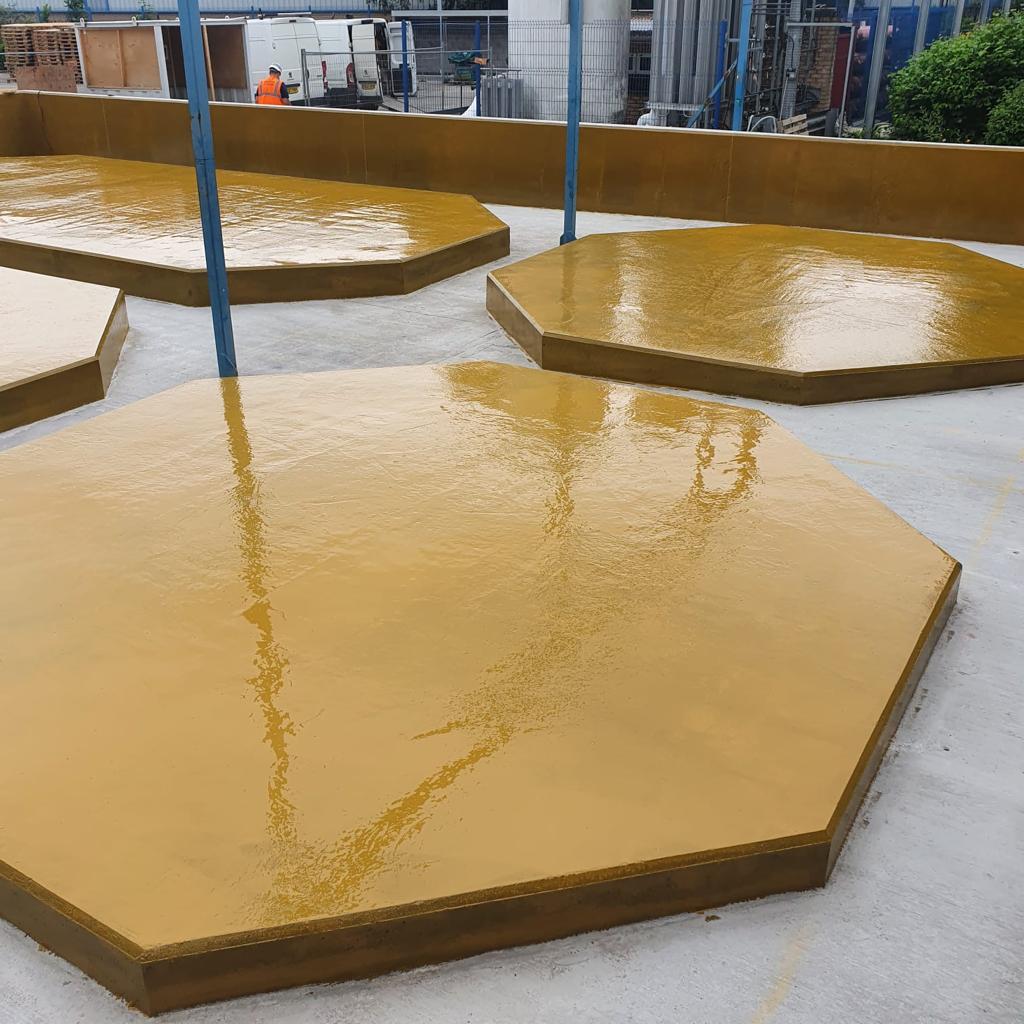
In manufacturing and engineering, bund lining is the chemically resistant, mechanically robust barrier that protects workshop floors, oil bunds, plating lines and lubricant compounds from spillage, leaks and process losses.
Key Bund Lining Challenges in Manufacturing and Engineering
Manufacturing and engineering is a broad sector but the bund lining challenges are remarkably consistent across it. Linings have to cope with mechanical loads no other industry imposes, oil and coolant chemistry that varies by station, and the daily reality of forklifts, drum handling and dropped tools. A compliant industrial bund in this sector has to deliver chemical resistance, mechanical durability and traffic tolerance from a single specification. The challenges that shape every specification we write in this sector include:
When Is This Required?

Manufacturing & Engineering Common Applications
Manufacturing sites carry a wider spread of bunded assets than most operators realise. From CNC machine sumps to plating tank surrounds, from transformer compounds to paint stores, common applications we line include:
Hydraulic oil bunds beneath presses, injection moulders, stamping lines and assembly plant
Lube oil and slideway oil bulk stores for bearing, gear and machine tool fluids
CNC machine sumps, swarf conveyors and coolant tank bunds
Quench oil tanks and heat treatment line bunds
Pickling, plating, anodising and electroplating tank surrounds
Phosphate dipping and surface treatment line bunds
Paint mixing rooms, paint kitchens, solvent stores and paint booth bunds
Powder coating booth floors and powder reclaim bunds
Used oil and waste oil compounds, including drum decks and IBC stores
Diesel, red diesel and standby generator fuel bunds
Foundry sand reclaim floors, casting line bunds and ladle wash bays
Forge shop hydraulic, billet handling and quench station bunds
Compressor oil bunds and air receiver compounds
Battery rooms and forklift charging compounds with electrolyte containment needs
Workshop, assembly hall and warehouse oil spill bund areas
Tanker offloading bays for oils, coolants and process chemistry
Lubricant dispensing bays and oil rec rooms
Manufacturing & Engineering Regulatory and Compliance Obligations
Manufacturing and engineering sit under a layered regulatory framework that combines environmental, workplace safety and waste management obligations. The principal references we design to are:
The Control of Pollution (Oil Storage) (England) Regulations
And equivalents, the headline rules for above-ground oil bunds at any meaningful threshold.
COMAH (Control of Major Accident Hazards Regulations)
Applicable wherever solvent, fuel oil or chemical thresholds bring a manufacturing site into upper- or lower-tier status.
DSEAR (Dangerous Substances and Explosive Atmospheres Regulations)
Relevant in solvent rooms, paint shops, fuel storage compounds and any area with flammable atmospheres.
COSHH
Applied across coolant, lubricant, plating chemistry and solvent handling.
Environment Agency
PPG2 (oil storage), PPG18 (chemical handling) and PPG26 (storage and handling of drums and IBCs).
The Hazardous Waste Regulations and Waste Framework Directive (retained)
Drive containment expectations around used oil, spent coolant and contaminated arisings.
The Environmental Permitting Regulations
Applicable to larger and process-permitted manufacturing sites under PPC.
HSE Guidance
Including HSG176 (storage of flammable liquids) and HSG140 (safe use and handling of flammable liquids).
CIRIA C736
Practical industry guidance on bund design, capacity and detailing.
BS 8204 series and BS 8000-9
For industrial flooring, applied alongside the lining specification.
Manufacturing & Engineering Recommended Lining Systems
Resin selection in manufacturing and engineering is dominated by mechanical loading, oil chemistry and thermal cycling. Our typical palette is:
Epoxy Resins
The workhorse for general workshop bunds, oil compounds and lubricant store floors, where reliable oil resistance, sound adhesion to concrete and predictable performance under traffic make epoxy the default choice. Most oil spill bund installations are based on a tuned epoxy build-up.
Polyurethane Resins
Selected where thermal cycling, paint shop chemistry or external exposure dominate, including paint kitchens, solvent stores and outdoor diesel compounds where rigid epoxies would crack or yellow.
Polyurea Resins
Rapid-cure systems for shutdown work where the line must be back in production inside a single weekend break. Their toughness suits forklift-trafficked drum decks, tanker offloading floors and high-impact maintenance bays.
Vinyl Ester Resins
The chemistry of choice for pickling lines, plating tanks and anodising line bunds, where concentrated mineral acids or oxidisers would destroy a standard epoxy. Vinyl esters are the default uprating where strong acid splashes are part of normal operation.
Novolac Epoxy Resin
Uprated chemistry for hot quench oil tanks, heat treatment plant bunds and high-temperature solvent areas, where standard epoxies would soften or be chemically degraded.
Speak to a Specialist
Our technical team can advise on the right system for your project.
Manufacturing & Engineering FAQs
A correctly specified and maintained lining typically delivers 15–25 years of compliant service across most workshop and oil bund duties. Forklift-trafficked areas, drum decks and heat treatment bunds tend to sit at the lower end of that range, with localised repair extending the asset’s useful life well beyond the lining’s first decade.
Often this is the case, yes. Work is staged around night shifts, weekend breaks or planned production windows, with rapid-cure polyurea systems returning a workshop bund to traffic inside 24 to 48 hours. Where a full shutdown is unavoidable, the work is programmed around the shortest viable outage agreed with production planning.
Run a visual inspection at least annually, with more frequent checks (quarterly) on forklift-trafficked drum decks, heat treatment bunds and oil offloading bays where wear patterns develop quickly. Inspections should be aligned with industrial bund cleaning and industrial bund emptying schedules, so any damage exposed during routine vacuum or jet washing is logged and addressed.
Repair work is carried out under permit-to-work, with the bund taken out of service, drained, cleaned and decontaminated of oil, coolant or chemical residue before any preparation begins. Damaged sections are cut out, the substrate is reprofiled, and the bund is recoated or fully relined to the original specification before being signed back into production service.
The most common are hydraulic oil, gear oil, lube oil, soluble coolant, neat cutting fluids, quench oil and waste oils, alongside paint solvents, surface treatment acids (sulphuric, hydrochloric, nitric, phosphoric) and caustic degreasers. Diesel, red diesel and standby fuel oil are handled in dedicated bunds, and plating chemistry receives a fully chemically resistant lining tailored to the bath in question.
The lining must resist abrasion, point loading and impact without losing its containment integrity. Trowel-applied mortar systems and toughened polyurea finishes are used where vehicle and drum movement are the dominant load case.
Daily thermal cycling between hot product handling and overnight workshop cool-down drives expansion, contraction and substrate movement that rigid epoxies struggle with. Polyurethane and polyurea systems are specified where thermal cycling is significant, and novolac epoxy is selected where hot oil or hot product spillage takes the floor temperature well above ambient on a routine basis.
Featured Case Studies