
Oil, Gas & Petrochemical
In the oil, gas and petrochemical sector, bund lining is the engineered barrier that turns a concrete bund into a fully sealed oil containment bund, capable of holding fuels, lubricants, condensate and process streams safely.
Bund Lining for Oil, Gas & Petrochemical
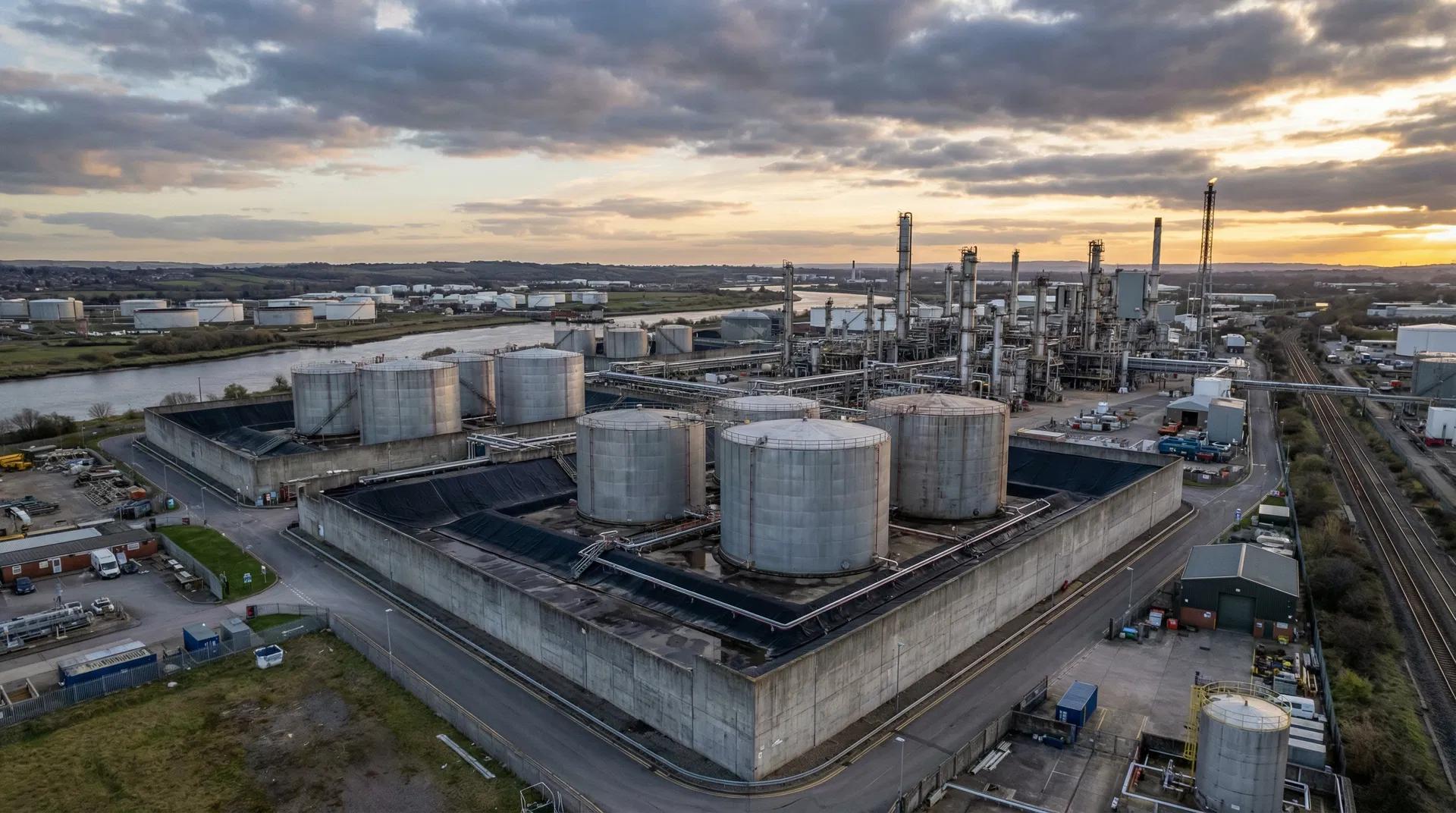
In the oil, gas and petrochemical sector, bund lining is the engineered barrier that turns a concrete bund into a fully sealed oil containment bund, capable of holding fuels, lubricants, condensate and process streams safely. This page is for engineers, HSE leads and operations managers responsible for fuel and chemical storage assets.
Key Bund Lining Challenges in Oil, Gas and Petrochemical
Bunding for chemicals and hydrocarbons in this sector sits under more pressure than almost any other. The chemistry is aggressive, the operational environment is demanding, and the regulatory bar is set deliberately high. The challenges we work around on a daily basis include:
Oil, Gas & Petrochemical Common Applications
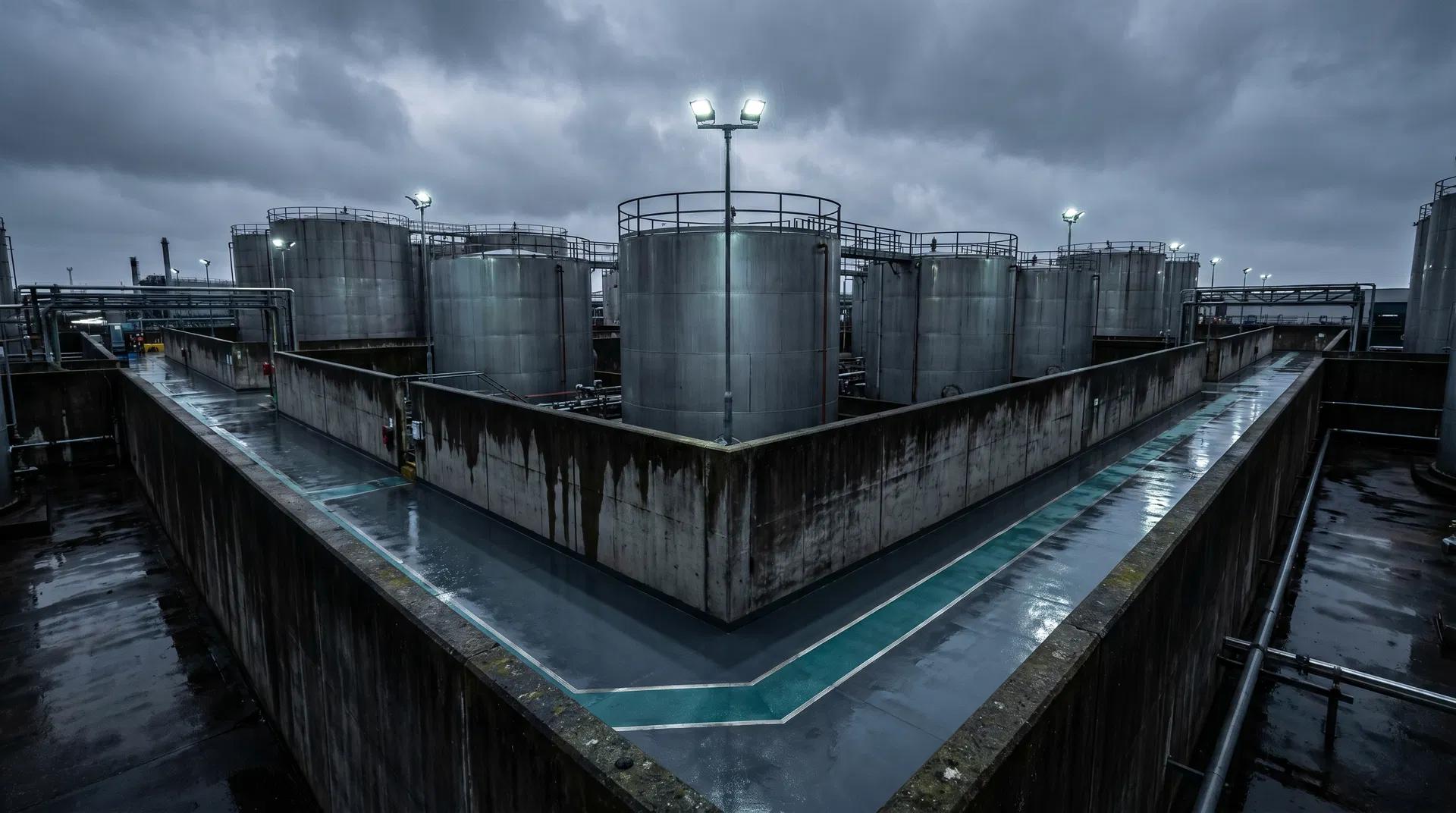
Hydrocarbon sites carry a wider range of containment assets than most operators realise — from headline tank farms down to small generator compounds. Typical structures we line include:
Tank Farm Bunds
Bulk storage tank bunds at refineries, terminals and depots
Oil Tank Bunding
Bunding of oil tanks at distribution sites, marine terminals and aviation fuel facilities
Fuel Bund Lining
Fuel bund lining for diesel, kerosene, heating oil and gasoline storage
Generator Bund Walls
Oil tank bund walls and oil bund walls at standby generator and CHP installations
Loading Bay Floors
Tanker offloading and loading bay floors
Storage Decks
Drum, IBC and ADBLUE storage decks
Chemical Storage Bunds
Bunded chemical storage containers and modular bunded chemical tanks
Plant Room Bunds
Process plant rooms and pump skid compounds
Pipeline Manifold Bunds
Pipeline manifold bunds and transfer station containment
Transformer Oil Containment
Oil containment for transformers at substations and power-generating sites
Lube Oil Bunds
Lube oil rooms and lubrication store bunds
Wash Bay Bunding
Wash bays, drainage interceptor bunds and oil spill bunding to outfall protection
Oil, Gas & Petrochemical Recommended Lining Systems
Resin selection in this sector is driven by chemistry, temperature and fire performance. For most oil, gas and petrochemical duties we draw from the following, with detail on each material on its sub-page:
Epoxy Resins
The workhorse for general hydrocarbon and lubricant exposure. Epoxies offer reliable chemical resistance to fuels, sound adhesion to concrete and excellent value across whole-life cost. They form the backbone of most fuel bund lining specifications.
Polyurethane Resins
Preferred where flexibility, crack-bridging and thermal cycling matter, particularly on external bunded chemical storage and exposed tank farm floors.
Polyurea Resins
Rapid-curing, mechanically tough, and well suited to high-traffic offloading bays, oil spill bund repairs and short turnaround windows where the asset must come back into service quickly.
Vinyl Ester Resins
Specified where additive packages, sour service or aggressive cleaning chemistry would attack a standard epoxy. The default uplift in chemical resistance for difficult duties.
Novolac Epoxy Resin
Uprated epoxy chemistry for the most demanding hydrocarbon and solvent exposure, including aromatic-rich streams and elevated service temperatures.
Oil, Gas & Petrochemical Recommended Build-Up Methods
Hydrocarbon sites typically operate to tight maintenance windows, and the build-up has to deliver compliance without overrunning the shutdown. Our standard approaches are:
Site Fabrication
Bespoke fabrication of bund elements, cover plates and edge profiles where the existing geometry of an oil tank bund or pipeline manifold demands a tailored solution.
Lining and Levelling
Correcting falls, profile and substrate defects across older bund oil compounds before the chemical bund lining is applied.
Protective Coatings
Multi-coat systems engineered for hydrocarbon resistance, fire performance and long-term durability under real operational loading.
Bund Lining Repairs
Targeted remediation of localised damage, allowing operators to defer full re-lining until the next planned shutdown.
Trowel Applied Mortar Systems
High-build, heavily filled systems for tanker bays, oil spill containment areas and other zones taking sustained mechanical and thermal load.
Surface Preparation
Abrasive blasting, scabbling, grinding and priming, all of which determine whether the rest of the build-up performs as designed.
Oil, Gas & Petrochemical Regulatory and Compliance Obligations
A compliant chemical bund in oil, gas and petrochemical service must evidence a clear line of sight back to UK regulation. Reschem operates as both chemical bund installers and chemical bund suppliers, so specifications are written, supplied and applied with this regulatory framework in mind from the outset. The principal obligations and references we design to are:
Not sure which system is right for you?
Our technical specialists can assess your requirements and recommend the most suitable solution.
Oil, Gas & Petrochemical FAQs
A bunded oil tank sits inside a separate containment structure, either an integrated double-skin (tank-within-a-tank) or an external concrete, masonry or steel bund wall surrounding the primary vessel, which is engineered to capture any leak. Visible signs include a raised perimeter around the tank, a defined containment volume between primary and secondary, and a normally-closed valved drain at the low point.
Yes, both primary and secondary containment can fail, and the bund itself can leak through cracks, perished joints, debonded coatings or open drainage valves. The point of bund lining is to make the secondary containment reliable enough that a primary leak is captured rather than released, which is why integrity testing and inspection records matter.
We work under permit-to-work, DSEAR/ATEX-compliant equipment and operator-specific shutdown procedures, with the work staged into planned outages, weekend windows or duty/standby rotations to keep the asset available. Rapid-cure polyurea systems compress turnaround further on time-critical bunds, and every method statement is risk-assessed against the live hydrocarbon environment.
Fire performance shifts the specification towards low flame-spread, fire-rated coatings and intumescent detailing, with the bund itself designed to hold released fuel locally so a pool fire cannot migrate to cable trenches or adjacent equipment. Capacity, freeboard and drainage are sized to absorb firefighting water alongside the contained fuel, in line with PPG 18 and HSE HSG176.
A correctly specified, properly applied and well-maintained bund lining typically delivers 15–25 years of compliant service in oil and gas duty. Tanker offload aprons and dispenser sumps sit at the lower end of that range due to traffic and splash exposure, while bulk tank bunds regularly reach the upper end.
Most bund lining projects in oil and gas complete in three to ten working days, including substrate preparation, application and cure, with rapid-cure polyurea systems compressing this further on time-critical assets. Larger tank farms, FRP/GRP tank chamber lay-up and multi-bund estates typically run from two to six weeks depending on scope and shutdown windows.
Run a visual inspection at least annually, with hydrostatic (wet) testing every three years for oil storage in line with EA guidance and the Oil Storage Regulations. Higher-risk and COMAH-tier sites typically require monthly to quarterly visual checks on top, with the inspection regime aligned to the site’s environmental permit.
Featured Case Studies