

Protective Coatings
Protective coatings is the build up method we use most often across bund lining work. Multi coat resin film systems go straight onto the substrate to deliver chemical, mechanical and aesthetic performance in one engineered package. It sits between substrate preparation and reinforced laminate work, and is the default where chemistry is moderate, the substrate is sound and reinforcement is not required.
How Protective Coatings Works
We treat protective coating as a sequenced multi coat operation, not a single application. Each layer has a defined role, bond, build and protect, and the system only performs as designed when every coat goes on within its window onto a properly prepared coat below. Our standard sequence is:
When Is This Required?
Protective Coating Types
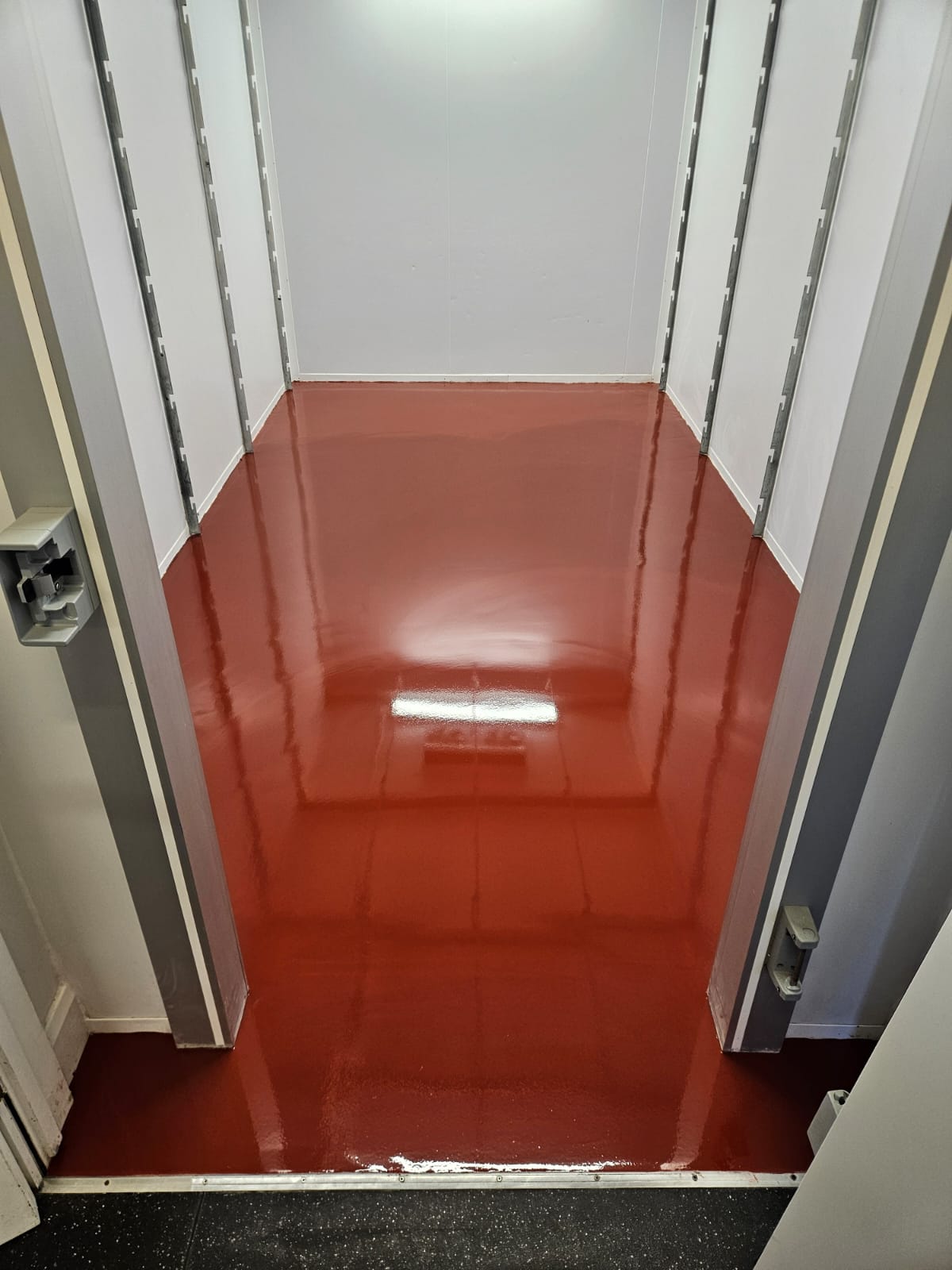
Protective Coating Performance and Thickness
A typical protective coating in bund service is built to 0.5–2 mm dry film thickness, with the right film build matched to the duty:
- Light duty: 250 to 500 microns, for ancillary bunds, plant rooms and lower risk areas with routine spillage rather than continuous chemical contact.
- Standard duty: 500 to 1,000 microns, the typical specification for most UK bunds, including hydrocarbon storage, food production floors and general industrial chemistry.
- Heavy duty: 1 to 2 mm and beyond, built as a multi coat film for tanker offload aprons, drum decks and aggressive chemical service.
Across every tier, the system delivers a smooth, continuous, chemical-resistant barrier with measurable adhesion, holiday-free coverage and a service life that comfortably reaches 15–25 years on most duties when properly maintained.
Compatible Protective Coating Materials
All five resin families in our range can be applied as a protective coating; the choice is driven by duty, not application method. We typically apply:
Epoxy Resins
The workhorse for most coating specifications: reliable chemical resistance, sound adhesion to concrete and steel, and a strong balance of cost and performance. The default for most bund lining and water tank lining projects.
Polyurethane Resins
A topcoat over epoxy where UV stability, colour retention or external exposure matter, or a full PU build where flexibility and crack bridging are part of the design case.
Polyurea Resins
Sprayed as a single high build coating where rapid return to service is essential, including live data centre, retail forecourt and short shutdown work.
Vinyl Ester Resins
A multi coat chemically resistant coating where reinforced lay up is unnecessary but acid and oxidiser performance is required.
Novolac Epoxy Resin
For elevated temperature, concentrated acid and aggressive solvent duty where standard epoxy coatings would soften or degrade.
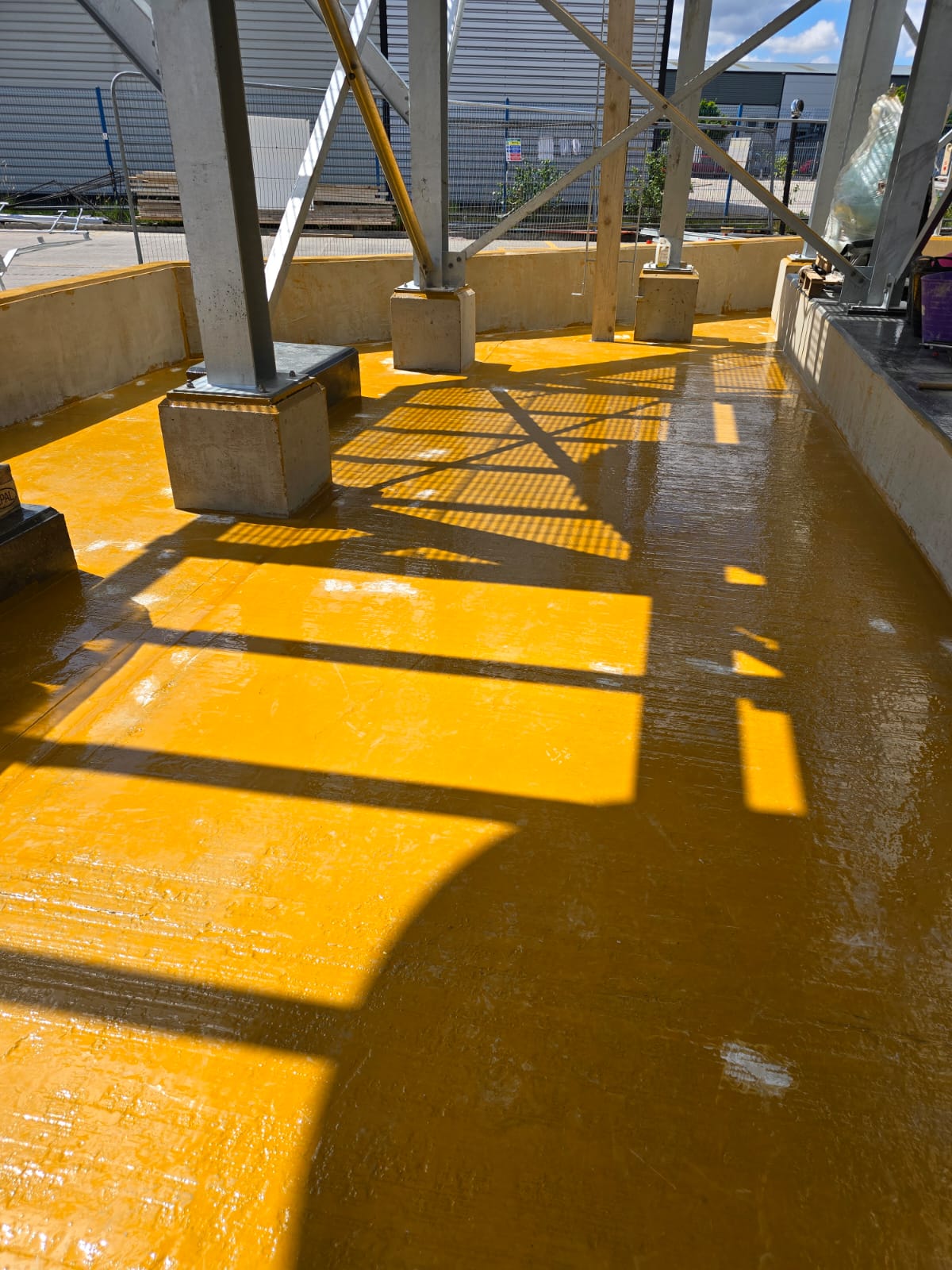
Advantages of Protective Coatings
Protective Coating Limitations
Need a lay-up specified for a demanding bund?
Speak to Reschem about the right laminate build-up, resin choice and inspection regime for aggressive chemical duty, confined structures or long-life containment assets.
When to Choose Protective Coatings
We specify a protective coating build up when the duty matches. The typical decision criteria are:
Moderate chemistry
Hydrocarbons, dilute acids and alkalis, food and beverage CIP and most utility side duties.
Sound substrate
No structural movement or live cracking that reinforcement would have to address.
Programme matters
A multi coat system fits a planned outage window where lay up would not.
Cost constrained
The duty does not justify the extra capital of a reinforced or trowel applied system.
Conventional geometry
No need for reinforcement around irregular features or structural integration.
Consistency wanted
A known, well understood build up specified, applied and maintained the same way across multiple bunds.
Renewable surface
Recoating or planned refresh is part of the asset management approach, with the coating treated as renewable rather than once and done.
Protective Coating Applications and Industries
Protective coatings is the build up most operators meet when they first specify a bund lining, and we deliver it across every sector we work in:
Oil, Gas and Petrochemical
Fuel storage bunds, plant rooms and tanker offloading aprons where epoxy and polyurethane multi-coat systems are the established default.
Chemical Processing
Utility and ancillary bunds, dosing skids and reagent stores where chemistry is moderate and reinforcement is not required.
Food & Beverage
Production floor bunds, CIP areas and ingredient stores where hygiene-led, easily cleaned coatings are the design case.
Sewage and Waste Water Treatment
Reagent stores, plant rooms and lower-risk treatment plant bunds outside the most aggressive BSA zones.
Power Generation and Transmission
Transformer bunds, generator compounds and plant rooms across DNO, transmission and renewables sites.
Agriculture & Aquaculture
Fertiliser bunds, fuel oil compounds and lower-risk farm assets where coating chemistry handles routine spillage.
Nuclear Facilities
Qualified, BS 4247-compliant coatings on active-area floors, support areas and lower-risk inactive bunds.
Protective Coating Surface Preparation Requirements
Protective Coating Quality Assurance and Testing
Protective Coating FAQs
Most coating projects are delivered with moderate, time-boxed disruption typically several consecutive days for substrate prep, application and cure, rather than the weeks that lay-up systems require. Rapid-cure polyurea systems can compress this further where the operator can absorb a single short, intense outage.
Substrate preparation typically takes one to two days, priming a half-day, each body coat one day with overnight cure between, and the topcoat a final half-day plus cure. A standard bunded area of moderate size is usually ready to return to service four to seven working days from arrival on site.
Yes, properly specified protective coatings are designed for both standing liquid contact during a contained spill and routine washdown, including hot CIP and pressure jetting. Resin selection has to be matched to the specific chemistry and temperature, but coating-grade systems regularly handle continuous wet service across their full design life.
Yes, for the majority of UK bund duties, a multi-coat protective coating is the standalone solution and delivers 15–25 years of compliant service with planned maintenance. We move to reinforced lay-up only where chemistry, mechanical loading or substrate condition push the duty outside what a coating can hold reliably.
Performance under thermal cycling depends on resin choice. Polyurethane and polyurea systems handle daily hot-cold swings well, while rigid epoxy systems can craze under repeated thermal shock. We specify accordingly, including novolac epoxy or polyurethane topcoats for elevated-temperature and external duty.
Yes, coatings are particularly well suited to confined and restricted access work, since brush, roller and small spray equipment can be used by hand without large mobile plant. Adequate ventilation, lighting and DSEAR-compliant equipment are essential, especially where solvent-based systems are specified.
Featured Case Studies

Get Independent Expert Advice
Speak to our technical specialists about your bund lining requirements. Free, no-obligation site surveys available nationwide.
